Passkeys vs. Authenticator Apps: 2026 Zero-Trust Benchmark
This article offers a comprehensive 2026 benchmark comparing passkeys and authenticator apps, alongside five prominent zero-trust security protocols, to evaluate their efficacy and future trajectory in securing digital interactions.
The landscape of digital security is constantly evolving, and understanding the latest authentication methods is crucial for safeguarding online identities and data. In this comprehensive analysis, we delve into a benchmark comparison of passkeys vs. authenticator apps, examining their strengths, weaknesses, and how they stack up against five major zero-trust security protocols in 2026.
Understanding the Core: Passkeys and Authenticator Apps
To truly appreciate the advancements in zero-trust security, it's essential to first grasp the foundational differences and operational mechanics of passkeys and authenticator apps. Both aim to enhance security beyond traditional passwords, but they achieve this through distinct methodologies, each with its own set of advantages and considerations for users and organizations.
Authenticator apps, for years, have been a popular choice for two-factor authentication (2FA). They generate time-based one-time passwords (TOTP) or HMAC-based one-time passwords (HOTP) that users input after their primary password. This adds a crucial layer of defense, making it significantly harder for attackers to gain unauthorized access even if they compromise a password.
The Mechanics of Authenticator Apps
Authenticator apps, such as Google Authenticator, Microsoft Authenticator, or Authy, operate on a shared secret key exchanged during setup. This key, combined with the current time (for TOTP) or a counter (for HOTP), generates a unique code that is valid for a short period, typically 30-60 seconds. The user enters this code into the login prompt, verifying their identity.
- Offline Functionality: Codes are generated locally, requiring no internet connection after initial setup.
- Device Dependence: The app resides on a specific device, meaning access to that device is necessary for authentication.
- Setup Complexity: Initial setup often involves scanning a QR code, which can be a minor hurdle for some users.
While effective, authenticator apps do have some drawbacks. If a device is lost or stolen, recovering access to accounts can be cumbersome, often requiring backup codes or extensive account recovery processes. Furthermore, they are still susceptible to phishing if users are tricked into entering their code on a fraudulent site.
Passkeys, on the other hand, represent a more modern approach, aiming to replace passwords entirely. They leverage public-key cryptography, where a unique cryptographic key pair is generated for each account. The private key remains securely on the user's device, while the public key is registered with the service.
How Passkeys Revolutionize Authentication
When a user attempts to log in with a passkey, the service challenges the user's device to prove possession of the private key. This is typically done through a biometric scan (fingerprint, face ID) or a PIN, without ever transmitting the private key itself. This process is inherently resistant to phishing because the authentication is tied to the specific domain and device.
- Phishing Resistance: Passkeys are cryptographically bound to the website or application, making phishing attempts ineffective.
- Improved User Experience: No passwords to remember or type; authentication is often a single biometric touch or face scan.
- Cross-Device Synchronization: Many passkey implementations allow for seamless synchronization across trusted devices, simplifying recovery.

The shift towards passkeys signifies a significant leap in user convenience and security. By eliminating the password, they remove the weakest link in many authentication chains. The underlying technology, WebAuthn, is supported by major platforms and browsers, paving the way for widespread adoption. In conclusion, while authenticator apps offer a robust second factor, passkeys move towards a passwordless future, addressing many of the inherent vulnerabilities of traditional password-based systems.
The Rise of Zero-Trust Security Protocols in 2026
Zero-trust security, a paradigm shift from traditional perimeter-based security, operates on the principle of "never trust, always verify." In 2026, this philosophy has become the cornerstone of enterprise and even personal cybersecurity, driven by the increasing sophistication of threats and the distributed nature of modern work environments. Several protocols and frameworks underpin this approach, moving beyond simple authentication to continuous verification.
These protocols are designed to ensure that every user, device, and application attempting to access resources is authenticated and authorized, regardless of whether they are inside or outside the traditional network perimeter. This continuous verification is critical in preventing lateral movement by attackers once they gain initial access.
Conditional Access Policies
Conditional access is a fundamental component of zero-trust. It involves defining policies that evaluate various signals – such as user location, device health, application sensitivity, and risk levels – before granting access to resources. This dynamic evaluation ensures that access is only granted when all conditions are met, and it can be revoked instantly if risk factors change.
- Dynamic Authorization: Access decisions are made in real-time based on a multitude of factors.
- Granular Control: Policies can be highly specific, controlling access to individual applications or data sets.
- Risk-Based Adjustments: Security posture can automatically adapt to perceived threats or changes in user behavior.
The effectiveness of conditional access lies in its ability to prevent unauthorized access proactively. By integrating with identity providers and device management solutions, it creates a robust framework for enforcing security policies across diverse environments. This continuous assessment of trust is a significant departure from older models that assumed inherent trust once a user was inside the network.
Another critical protocol in the zero-trust ecosystem is Microsegmentation. This technique involves dividing network perimeters into small, isolated zones to secure individual workloads. By implementing strict policies between these segments, organizations can limit the impact of a breach, preventing attackers from moving freely across the network.
Microsegmentation and Least Privilege Access
Microsegmentation works by applying security policies at a very granular level, often down to individual application components or even containers. This creates a "default-deny" posture, where communication is only allowed if explicitly permitted. This significantly reduces the attack surface and contains threats.
- Reduced Attack Surface: Limits lateral movement for attackers, containing breaches.
- Enhanced Visibility: Provides detailed insights into network traffic between segments.
- Policy Enforcement: Ensures strict adherence to security policies at a granular level.
Coupled with microsegmentation is the principle of least privilege access, which dictates that users and systems should only be granted the minimum necessary permissions to perform their tasks. This minimizes the potential damage if an account is compromised. Together, these protocols form a formidable defense against advanced persistent threats and insider attacks. In summary, zero-trust protocols like conditional access and microsegmentation are redefining how organizations approach security, emphasizing continuous verification and granular control to protect valuable assets in 2026.
Benchmarking Passkeys Against Authenticator Apps
When comparing passkeys vs. authenticator apps, a benchmark analysis reveals distinct advantages and disadvantages for each in terms of security, user experience, and deployment scalability. While both aim to strengthen authentication, their fundamental mechanisms lead to different performance metrics in a zero-trust environment.
Authenticator apps, for all their widespread adoption, introduce a slight friction into the user experience. Users must switch between apps, manually enter codes, and be mindful of the time limit. This can lead to user frustration and, in some cases, encourage workarounds that compromise security. Moreover, the shared secret model, while robust, is not entirely immune to sophisticated phishing attacks where users are tricked into revealing their TOTP on a malicious site.
Security Posture and Phishing Resistance
Passkeys, by design, offer superior phishing resistance. Because the private key never leaves the user's device and the authentication is cryptographically bound to the specific origin (website or application), a malicious site cannot trick a user into revealing their credentials. This intrinsic security feature makes passkeys a more robust defense against a prevalent attack vector.
- Passkeys: Inherently phishing-resistant, private key never leaves device.
- Authenticator Apps: Susceptible to sophisticated phishing if users input codes on fraudulent sites.
- Zero-Trust Alignment: Passkeys align more closely with zero-trust principles by eliminating shared secrets.
The cryptographic binding of passkeys means that even if a user attempts to authenticate on a fake website, the browser or operating system will recognize the mismatch and refuse to perform the authentication. This is a game-changer for digital security, significantly reducing the risk of credential theft.
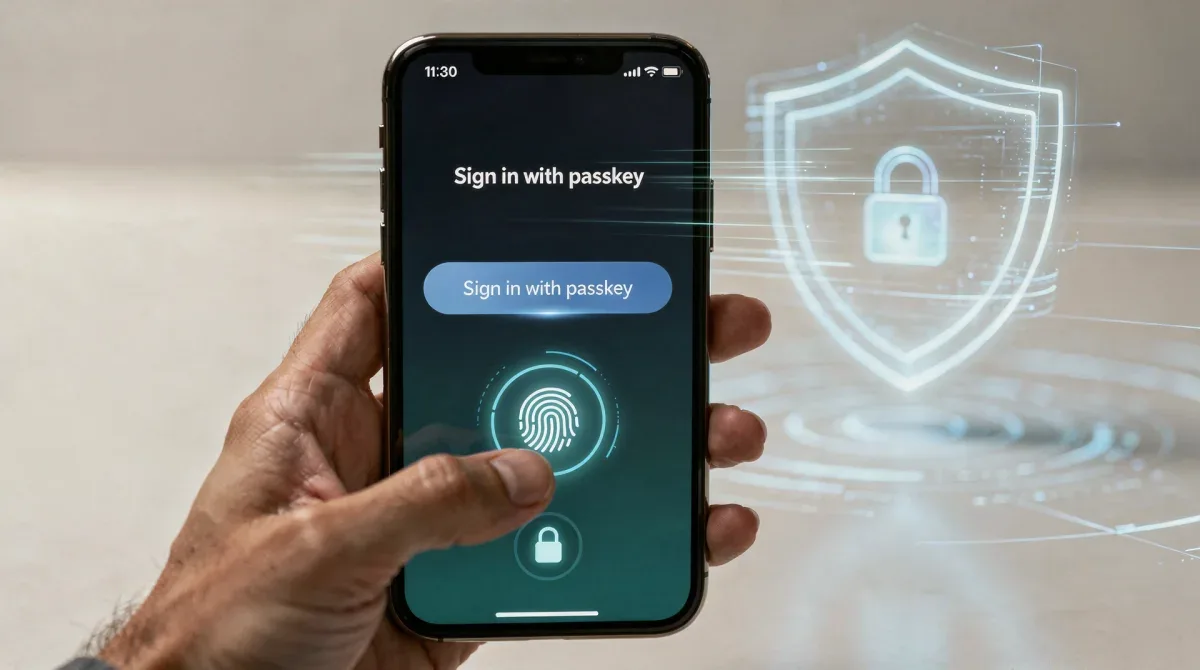
From a user experience standpoint, passkeys offer a seamless, passwordless login. A simple biometric scan or PIN entry replaces the need to remember complex passwords and retrieve OTPs. This dramatically reduces cognitive load and improves accessibility, leading to higher adoption rates and fewer support tickets related to forgotten credentials.
User Experience and Scalability
For organizations, the scalability of passkeys is a significant advantage. As they are built on open standards like WebAuthn, they offer cross-platform compatibility and can be integrated into existing identity management systems with relative ease. This contrasts with managing various authenticator app configurations or proprietary solutions.
- Passkeys: Seamless, passwordless login; improved accessibility; higher adoption.
- Authenticator Apps: Requires manual code entry; potential for user friction.
- Deployment: Passkeys offer better cross-platform compatibility and simpler integration for large-scale deployments.
While authenticator apps have served a vital role in enhancing security, their limitations in user experience and susceptibility to specific attack vectors make them less ideal for the evolving zero-trust landscape of 2026. Passkeys emerge as the superior solution, offering both enhanced security and a streamlined user experience, making them a cornerstone for future authentication strategies. In conclusion, passkeys deliver a more secure and user-friendly experience, aligning better with the stringent demands of zero-trust architectures.
Integrating Passkeys with Zero-Trust Frameworks
The synergy between passkeys and zero-trust security protocols is profound, making passkeys a natural fit for modern, robust authentication frameworks. By eliminating passwords and leveraging strong cryptographic principles, passkeys inherently support the "never trust, always verify" ethos, enhancing the overall security posture of any zero-trust implementation.
In a zero-trust model, every access request is treated as if it originates from an untrusted network. This means that strong, verifiable identity is paramount. Passkeys provide this strong identity assurance by linking authentication directly to a user's device and a biometric factor, significantly reducing the risk of impersonation and credential compromise.
Enhancing Identity Verification
Passkeys contribute to zero-trust by strengthening the identity verification phase. When a user authenticates with a passkey, the system doesn't just verify a password; it verifies the legitimate possession of a cryptographic key tied to a specific user and device. This provides a higher level of assurance than traditional password-plus-OTP methods.
- Cryptographic Proof: Verifies possession of a unique key, not just knowledge of a secret.
- Device Binding: Authentication is tied to a trusted device, adding another layer of verification.
- Reduced Attack Surface: Eliminates password-related vulnerabilities, a major target for attackers.
This robust identity verification is critical for the initial access decision in a zero-trust framework. Once a user's identity is strongly established via a passkey, subsequent access decisions can be made with greater confidence, allowing conditional access policies to function more effectively. The reduction in password-related incidents also frees up security teams to focus on more complex threat vectors.
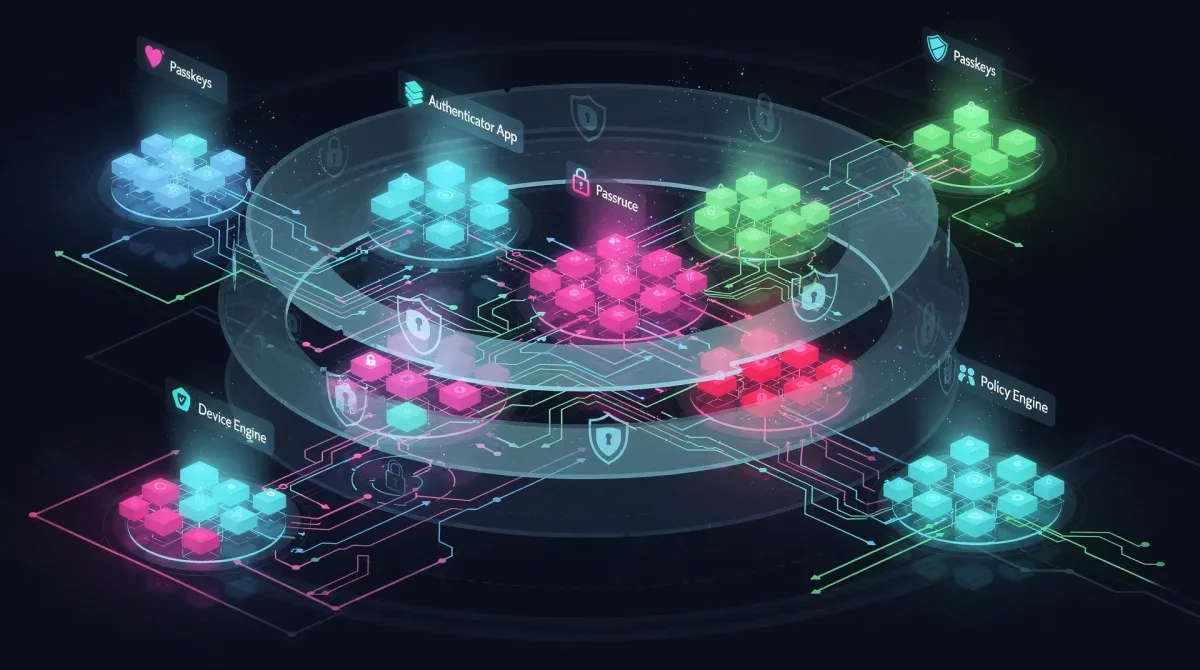
Passkeys also seamlessly integrate with continuous verification mechanisms, which are central to zero-trust. While the initial login is strong, the zero-trust model requires ongoing assessment of trust. If a passkey-authenticated device exhibits unusual behavior or moves to an untrusted network segment, conditional access policies can prompt re-authentication or restrict access.
Seamless Integration with Conditional Access
The metadata associated with passkey authentication, such as the device type and security posture, can feed directly into conditional access engines. This allows for more intelligent and dynamic policy enforcement, ensuring that access is not only granted securely but also maintained securely throughout a session.
- Dynamic Policy Enforcement: Passkey data informs real-time access decisions.
- Contextual Security: Authentication adapts to changes in user, device, and environment.
- User Experience: Strong security without constant interruptions, only challenging when necessary.
The combination of phishing-resistant passkeys for initial authentication and intelligent conditional access for continuous verification creates a powerful, adaptive security posture. This integration provides a robust defense against evolving threats, embodying the core principles of zero-trust security in a practical and user-friendly manner. In conclusion, passkeys are not just an authentication method but a foundational element that significantly enhances the efficacy of zero-trust security frameworks by providing strong, verifiable identity and facilitating dynamic access control.
Challenges and Adoption Rates of Passkeys in 2026
Despite their clear advantages, the widespread adoption of passkeys in 2026 still faces several challenges, primarily related to legacy system integration, user education, and the need for universal support across all platforms and services. While momentum is building, overcoming these hurdles is crucial for passkeys to fully replace traditional authentication methods.
One of the most significant challenges is the sheer volume of existing systems and applications that rely on password-based authentication. Migrating these systems to support passkeys requires significant development effort and investment, which can be a deterrent for organizations, especially those with complex IT infrastructures. Interoperability with older systems is a key concern that needs to be addressed.
Overcoming Integration Hurdles
For passkeys to achieve ubiquity, seamless integration with a diverse range of platforms, from web browsers and mobile operating systems to enterprise applications and IoT devices, is paramount. While major players like Apple, Google, and Microsoft have committed to passkey support, the long tail of smaller applications and services still needs to catch up.
- Legacy System Compatibility: Integrating passkeys with older infrastructures requires substantial effort.
- Universal Platform Support: Ensuring consistent passkey functionality across all devices and services.
- Developer Resources: Availability of tools and expertise for passkey implementation.
The transition period will likely involve a hybrid approach, where both passwords and passkeys coexist, adding complexity for both users and administrators. Standardizing implementation guides and providing robust developer kits will be essential to accelerate this transition. Without clear pathways for integration, many organizations may delay their adoption, slowing overall progress.
Another critical aspect is user education. While passkeys offer a superior user experience, the concept of passwordless authentication is still new to many. Users need to understand how passkeys work, how to manage them, and the security benefits they provide. Misinformation or a lack of clear guidance can hinder adoption, even if the technology is superior.
User Education and Trust Building
Building user trust in a new authentication paradigm is crucial. Users are accustomed to passwords, and convincing them to switch to a system where their "keys" are invisible and managed by their devices requires clear communication and demonstrable reliability. The fear of losing access due to a lost device or a technical glitch needs to be addressed proactively.
- Clear Communication: Explaining the benefits and mechanisms of passkeys simply and effectively.
- Ease of Recovery: Ensuring robust and user-friendly account recovery options for lost devices.
- Demonstrating Reliability: Showcasing the consistent and secure performance of passkeys in real-world scenarios.
Organizations and platform providers must invest in comprehensive educational campaigns, providing tutorials, FAQs, and readily available support. The success of passkeys hinges not just on their technical superiority but also on their perceived ease of use and trustworthiness by the general public. In conclusion, while passkeys offer immense potential, their journey to universal adoption in 2026 is marked by significant integration and user education challenges that must be systematically addressed to realize their full impact on digital security.
Future Outlook: Zero-Trust Protocols and Beyond 2026
Looking beyond 2026, the evolution of zero-trust security protocols, with passkeys at their forefront, promises an even more secure and seamless digital experience. The convergence of artificial intelligence (AI), machine learning (ML), and advanced behavioral analytics is set to push the boundaries of continuous authentication and adaptive security, making digital interactions inherently safer.
The core principle of "never trust, always verify" will deepen, extending its reach to every micro-transaction and data access request. This will move beyond simple user and device authentication to encompass the integrity of data itself, ensuring that even data in transit or at rest is continuously validated for authenticity and non-tampering.
AI and Machine Learning in Zero-Trust
AI and ML will play a pivotal role in refining zero-trust. By analyzing vast datasets of user behavior, network traffic, and system logs, AI algorithms will be able to detect anomalies and potential threats with unprecedented speed and accuracy. This will enable predictive security measures, proactively identifying risks before they manifest into breaches.
- Predictive Threat Detection: AI identifies unusual patterns to prevent attacks before they occur.
- Adaptive Policies: ML-driven systems automatically adjust access policies based on real-time risk assessments.
- Behavioral Biometrics: Continuous verification based on unique user interaction patterns.
This intelligent layer will allow zero-trust frameworks to become truly adaptive, responding dynamically to the ever-changing threat landscape. Instead of relying solely on predefined rules, security systems will learn and evolve, making them more resilient against novel attack techniques. This shift towards intelligent security will be a cornerstone of post-2026 cybersecurity strategies.
Furthermore, the integration of decentralized identity solutions and blockchain technology holds immense promise for enhancing the trustworthiness and immutability of identity verification within a zero-trust model. Self-sovereign identity (SSI) could empower users with greater control over their digital identities, reducing reliance on centralized identity providers and mitigating single points of failure.
Decentralized Identity and Quantum Computing Threats
Decentralized identity, combined with passkeys, could create a highly resilient and privacy-preserving authentication ecosystem. Users would manage their own verified credentials, presenting them as needed without exposing unnecessary personal information, further strengthening the zero-trust principle of least privilege.
- Self-Sovereign Identity: Users control their digital identities, enhancing privacy and security.
- Blockchain Integration: Immutable records for credential verification and audit trails.
- Quantum-Resistant Cryptography: Preparing for the post-quantum era to secure passkeys and other protocols.
However, the horizon also brings challenges, notably the advent of quantum computing. The cryptographic foundations of current passkeys and many zero-trust protocols could be vulnerable to quantum attacks. Research into quantum-resistant cryptography will be critical to ensure the long-term viability and security of these advanced authentication methods. In conclusion, the future of zero-trust security beyond 2026 is an exciting frontier, characterized by intelligent automation, decentralized identity, and a proactive defense against emerging threats like quantum computing, continually striving for an intrinsically secure digital environment.
Best Practices for Implementing Zero-Trust with Passkeys
Implementing a zero-trust architecture, especially with the integration of passkeys, requires a strategic and methodical approach to maximize security benefits and ensure a smooth transition. Adhering to best practices is crucial to avoid common pitfalls and to establish a truly robust and adaptive security posture in 2026 and beyond.
The first step in any zero-trust implementation is a thorough assessment of existing infrastructure, identifying all users, devices, applications, and data that need protection. This inventory forms the basis for defining granular access policies and understanding potential areas of vulnerability. Without a clear understanding of the landscape, effective policy enforcement is impossible.
Conducting a Comprehensive Asset Inventory
Before deploying any new security measures, organizations must have a detailed understanding of their digital assets. This includes mapping data flows, understanding user roles and permissions, and identifying all endpoints that access corporate resources. This foundational work ensures that zero-trust policies are applied comprehensively and correctly.
- Identify All Endpoints: Catalog every device, user, and application accessing resources.
- Map Data Flows: Understand how sensitive data moves across the network.
- Define User Roles: Clearly delineate permissions based on job functions and necessity.
This comprehensive inventory allows for the creation of a baseline of "normal" behavior, which is essential for anomaly detection in a zero-trust model. It also helps in prioritizing which assets require the strongest protection and which can be transitioned to passkey authentication first. A well-executed inventory lays the groundwork for all subsequent security enhancements.
Once the inventory is complete, the next critical best practice is to adopt a phased rollout strategy for passkeys and zero-trust policies. Attempting a "big bang" deployment can lead to disruptions, user resistance, and unforeseen technical issues. A gradual approach allows for testing, fine-tuning, and user adaptation.
Phased Rollout and Continuous Monitoring
Start with a small pilot group, perhaps a specific department or a set of non-critical applications, to test the passkey integration and zero-trust policies. Gather feedback, address issues, and refine the implementation before scaling up. This iterative process minimizes risk and builds confidence in the new security framework.
- Pilot Programs: Test passkeys and policies with a small, controlled group.
- Iterative Refinement: Collect feedback and make adjustments before wider deployment.
- User Training: Provide ongoing education and support for new authentication methods.
Continuous monitoring and auditing are also indispensable. Even after full deployment, zero-trust is an ongoing process, not a one-time setup. Regularly review access logs, analyze security alerts, and audit policies to ensure they remain effective against evolving threats. Utilize security information and event management (SIEM) systems and security orchestration, automation, and response (SOAR) platforms to automate monitoring and incident response.
Regular security audits and penetration testing will also help identify any gaps or misconfigurations in the zero-trust architecture. This proactive approach ensures that the security posture remains strong and adaptive. In conclusion, effective implementation of zero-trust with passkeys hinges on a detailed asset inventory, a strategic phased rollout, and a commitment to continuous monitoring and adaptation, ensuring robust and future-proof digital security.
| Key Aspect | Brief Description |
|---|---|
| Passkeys vs. Authenticator Apps | Passkeys offer superior phishing resistance and user experience over authenticator apps due to cryptographic binding and passwordless login. |
| Zero-Trust Principles | "Never trust, always verify" is the core, with continuous authentication and authorization for every access request. |
| Integration with Zero-Trust | Passkeys enhance zero-trust by providing strong, phishing-resistant identity verification, crucial for dynamic access control. |
| Future Trends | AI/ML, decentralized identity, and quantum-resistant cryptography will further evolve zero-trust security beyond 2026. |
Frequently Asked Questions About Passkeys and Zero-Trust
What is the primary advantage of passkeys over authenticator apps?▼The primary advantage of passkeys is their inherent phishing resistance. Unlike authenticator apps, which can be tricked into providing codes to malicious sites, passkeys are cryptographically bound to the specific website or application, preventing unauthorized use even if a user is duped.
How do passkeys contribute to a zero-trust security model?▼Passkeys align perfectly with zero-trust by providing strong, verifiable identity without relying on passwords. Their phishing resistance and device binding enhance the "never trust, always verify" principle, making initial authentication more robust and supporting continuous access evaluation.
Are passkeys truly passwordless, and what does that mean for security?▼Yes, passkeys are designed to be truly passwordless. This means users no longer need to create, remember, or type complex passwords, eliminating the weakest link in many security chains. It significantly reduces the risk of credential theft, brute-force attacks, and password-related phishing.
What are the main challenges for passkey adoption in 2026?▼Key challenges include integrating passkeys with legacy systems, ensuring universal support across all platforms and services, and educating users on how they work and their benefits. Overcoming these requires significant industry-wide collaboration and user awareness campaigns.
How will AI and ML impact zero-trust protocols in the future?▼AI and ML will enhance zero-trust by enabling predictive threat detection, dynamically adjusting access policies based on real-time risk assessments, and implementing continuous behavioral biometrics. This will lead to more adaptive and resilient security frameworks that can proactively counter evolving threats.
Conclusion
The comparison between passkeys and authenticator apps, particularly within the context of 2026's zero-trust security landscape, clearly indicates a pivotal shift towards more secure and user-friendly authentication methods. Passkeys, with their inherent phishing resistance and seamless user experience, emerge as a superior solution, aligning perfectly with the "never trust, always verify" paradigm. While challenges in adoption and integration remain, the ongoing evolution of zero-trust protocols, augmented by AI, ML, and decentralized identities, promises a future where digital interactions are intrinsically more secure, adaptive, and resilient against an ever-changing threat landscape. Embracing these advanced security measures is no longer optional but a fundamental requirement for safeguarding our digital lives.
