Silent Commerce: The Rise of Self-Checkout Hubs in US Groceries
The silent commerce revolution is reshaping the US grocery landscape, with 73% of shoppers now preferring fully automated self-checkout hubs for their speed, convenience, and efficiency, marking a significant shift in consumer preferences.
The landscape of grocery shopping in the United States is undergoing a profound transformation, driven by an undeniable shift in consumer preference. A striking 73% of US grocery shoppers now favor fully automated self-checkout hubs, ushering in an era of silent commerce grocery. This isn't merely a trend; it's a fundamental recalibration of how consumers interact with retail, prioritizing efficiency, autonomy, and a frictionless experience.
The rise of silent commerce in US groceries
Silent commerce, characterized by transactions completed with minimal or no human interaction, is rapidly becoming the norm in US grocery stores. This surge in popularity for automated self-checkout hubs reflects a broader societal move towards convenience and technological integration in daily life. Shoppers are increasingly seeking control over their purchasing journey, valuing speed and independence above traditional staffed lanes.
This preference isn't accidental; it's a response to several factors that have reshaped the retail environment. The demand for quicker transactions, especially during peak hours, and the desire to avoid perceived inefficiencies of conventional checkout lines are significant drivers. Furthermore, the advancements in self-checkout technology have made these systems more reliable and user-friendly, reducing friction points that previously deterred some consumers.
Understanding the consumer shift
- Speed and efficiency: Automated systems often process transactions faster, reducing wait times.
- Autonomy and control: Shoppers appreciate the ability to manage their own checkout process.
- Reduced social interaction: For many, avoiding small talk or perceived judgment is a plus.
- Perceived hygiene: Less direct contact with cashiers and other shoppers can be appealing.

The evolution of self-checkout from a niche option to a mainstream preference highlights a fundamental change in consumer expectations. Retailers who have invested in robust, user-friendly automated systems are now reaping the benefits of increased customer satisfaction and operational efficiency. The silent commerce model, while seemingly simple, represents a complex interplay of technological advancement and evolving consumer psychology.
Ultimately, the widespread adoption of silent commerce in grocery settings is a testament to its practical advantages. As technology continues to improve, and as consumers become even more comfortable with automation, this trend is only poised to accelerate, solidifying its place as a cornerstone of modern retail.
Consumer psychology behind automated checkout preference
Delving deeper into why 73% of US grocery shoppers prefer fully automated self-checkout hubs reveals fascinating insights into modern consumer psychology. It’s not just about speed; it’s about a complex interplay of factors including control, privacy, and even a subtle aversion to social friction. Shoppers are increasingly valuing an experience where they dictate the pace and terms of their transaction.
The feeling of control is paramount. When using a self-checkout, individuals manage the scanning, bagging, and payment process, eliminating reliance on another person's speed or mood. This autonomy can significantly reduce perceived stress during busy shopping trips. Moreover, for many, the self-checkout lane offers a degree of privacy, allowing them to purchase items without direct interaction, which can be particularly appealing for certain types of purchases or for those who simply prefer a more solitary experience.
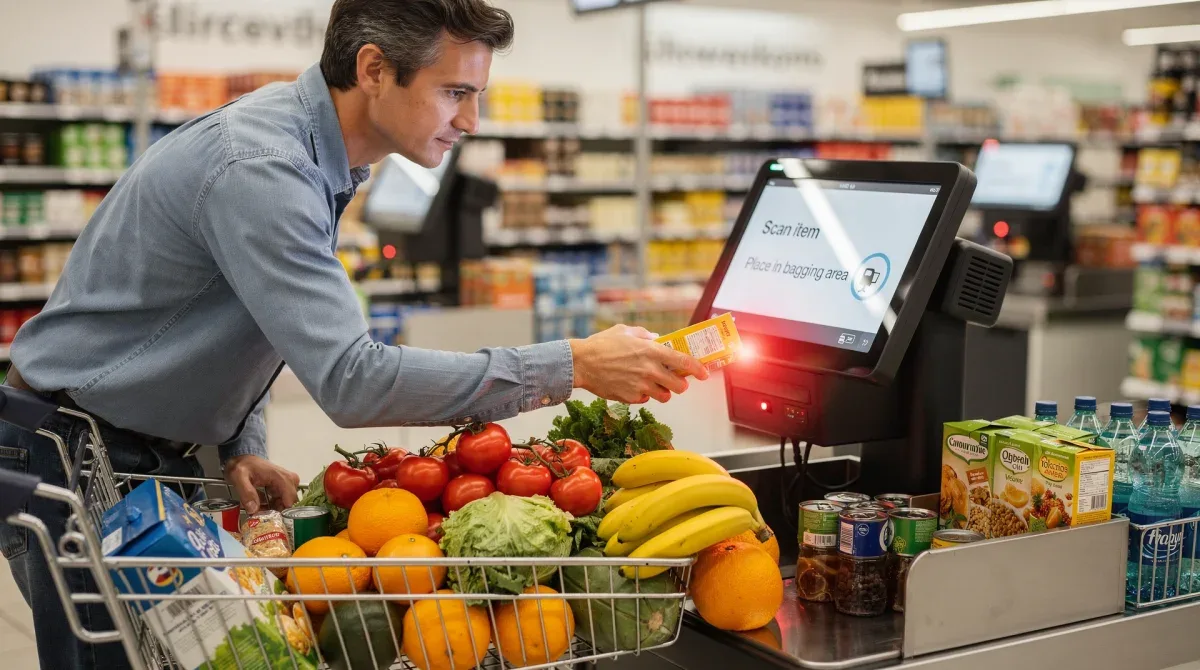
Beyond control and privacy, there's also the psychological impact of perceived efficiency. Even if a staffed lane is momentarily empty, the *potential* for a slower interaction or a queue forming can steer shoppers towards self-checkout, where the process feels more predictable and within their command. This anticipation of efficiency often outweighs the reality, solidifying the preference.
The allure of frictionless shopping
Frictionless shopping is the holy grail for many modern consumers. It refers to a shopping experience that is as smooth, quick, and effortless as possible. Automated self-checkout hubs embody this ideal by:
- Minimizing wait times: Directly addressing one of the biggest pain points in traditional retail.
- Simplifying payment: Often integrating various digital payment options seamlessly.
- Reducing human error: While not entirely infallible, the perceived reduction in human-induced mistakes can be attractive.
The absence of mandatory social interaction is another powerful draw. For introverted individuals or those simply having a busy day, bypassing small talk at the register is a significant benefit. This doesn't imply a lack of social connection in general, but rather a preference for transactional efficiency in a specific context. The quiet hum of machines, the focused task of scanning, and the quick tap-and-go payment create a uniquely 'silent' yet satisfying commerce experience.
Technological innovations driving self-checkout adoption
The widespread adoption of fully automated self-checkout hubs wouldn't be possible without significant technological advancements. These innovations have transformed what was once a clunky, error-prone system into a smooth, efficient, and reliable part of the grocery shopping experience. From improved barcode scanners to sophisticated AI-powered weight sensors, technology is continually refining the silent commerce model.
Modern self-checkout machines are equipped with high-speed, omnidirectional scanners that can read barcodes from almost any angle, drastically reducing the time it takes for shoppers to process items. This eliminates much of the frustration associated with older systems where precise positioning was required. Furthermore, intuitive touchscreens with clear graphical interfaces guide users through each step, making the process accessible even for less tech-savvy individuals.
Key technological enablers
- Advanced scanning technology: Faster, more accurate barcode readers and even camera-based item recognition for produce.
- AI-powered weight sensors: Significantly reducing errors and fraud by accurately identifying items placed in the bagging area.
- Intuitive user interfaces: Streamlined software with clear prompts and visual cues for a seamless experience.
- Integrated payment solutions: Support for mobile payments, contactless cards, and digital wallets, alongside traditional methods.
Beyond the visible hardware, the backend software and network infrastructure play a crucial role. Cloud-based systems allow for real-time inventory updates, pricing accuracy, and remote troubleshooting, ensuring maximum uptime for the self-checkout hubs. Data analytics gathered from these systems also provide valuable insights into consumer behavior, helping retailers optimize store layouts and product placements.
Looking ahead, emerging technologies such as computer vision for basket recognition—where an entire cart's contents are scanned simultaneously—and personalized AI assistants promise to make the self-checkout experience even more seamless and efficient. These continuous innovations are not just improving existing systems but are fundamentally redefining what's possible in the realm of silent commerce, further entrenching its role in grocery retail.
Operational benefits for grocery retailers
While consumer preference is a primary driver, the operational benefits for grocery retailers adopting fully automated self-checkout hubs are equally compelling. These systems offer significant advantages in terms of cost reduction, efficiency gains, and resource optimization, directly impacting the bottom line and allowing stores to reallocate labor to more value-added tasks. The investment in silent commerce technology often yields substantial returns for businesses.
One of the most immediate benefits is reduced labor costs. By minimizing the need for numerous cashiers, stores can either lower their payroll expenses or strategically redeploy staff to areas like stocking shelves, assisting customers on the floor, or managing online order fulfillment. This reallocation can lead to improved overall store operations and customer service in other departments, enhancing the shopping experience beyond the checkout.
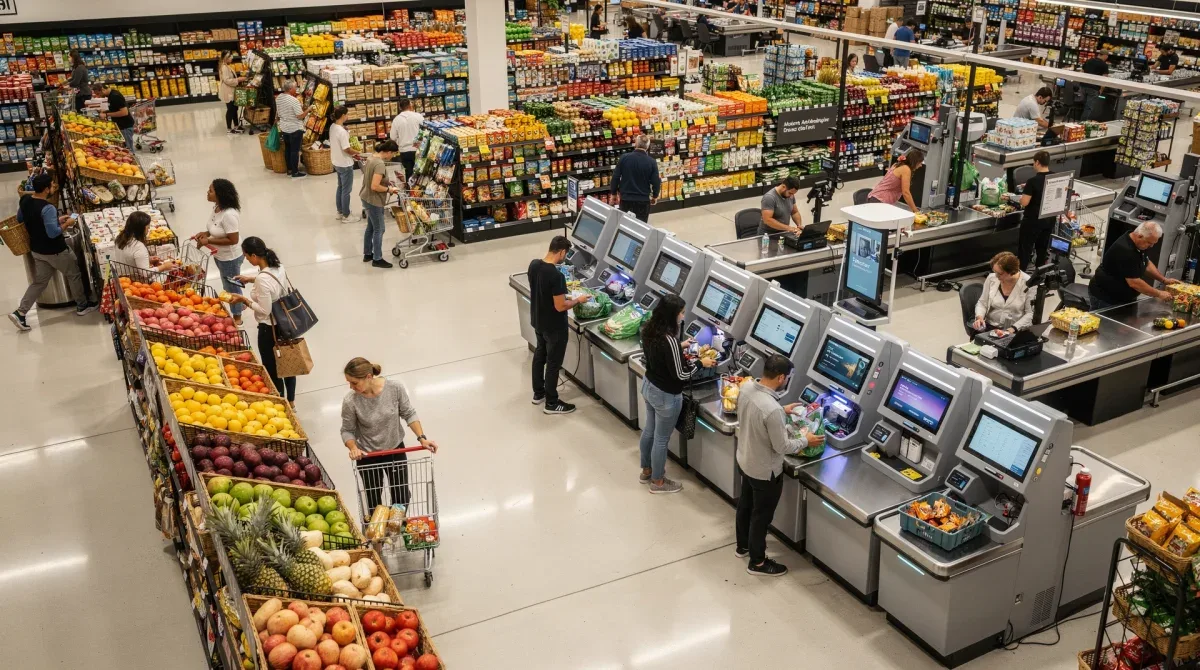
Moreover, self-checkout hubs can process more transactions per hour than traditional lanes, especially during peak periods. This increased throughput helps to reduce queue lengths, leading to higher customer satisfaction and a faster overall shopping journey. Efficient space utilization is another advantage; a bank of self-checkout machines can often occupy less floor space than an equivalent number of staffed registers, freeing up valuable retail area for product displays or expanded aisles.
Enhanced efficiency and resource allocation
Retailers are leveraging silent commerce to:
- Optimize staffing: Shifting employees from repetitive checkout tasks to more interactive customer service roles.
- Increase transaction speed: Reducing bottlenecks and improving customer flow, especially during busy times.
- Reduce operational overhead: Lowering long-term labor costs associated with checkout operations.
- Improve data collection: Gaining insights into purchasing patterns and peak traffic times for better management.
Beyond the direct financial and efficiency gains, automated systems also provide valuable data. Transaction logs and usage patterns can inform inventory management, staffing schedules, and even store layout decisions. This data-driven approach allows retailers to continually refine their operations, making their silent commerce hubs even more effective and responsive to both consumer needs and business objectives.
Addressing challenges and future outlook for silent commerce
Despite the overwhelming preference for fully automated self-checkout hubs, the silent commerce model is not without its challenges. Issues such as potential for theft, technical glitches, and the need for customer assistance occasionally arise. However, ongoing innovations and strategic implementations are continuously addressing these concerns, paving the way for an even more integrated and seamless future.
Shrinkage, or inventory loss due to theft, is a primary concern for retailers. Modern self-checkout systems are combating this with advanced weight sensors, AI-powered computer vision, and improved security monitoring. While not entirely eliminating the problem, these technologies significantly reduce opportunities for deliberate or accidental scanning errors. Furthermore, the presence of dedicated attendants overseeing multiple self-checkout stations provides a human touchpoint for assistance and oversight.
Overcoming common obstacles
- Mitigating shrinkage: Implementing sophisticated weight sensors and AI to detect scanning discrepancies.
- Enhancing user experience: Improving software interfaces and providing clear, multilingual instructions.
- Providing quick support: Ensuring trained staff are readily available to assist with technical issues or product look-ups.
The future of silent commerce in grocery stores looks promising, with several key trends on the horizon. Expect to see further integration of mobile payment options, personalized promotions delivered directly to the self-checkout screen, and even more advanced AI that can recognize items without the need for barcode scanning. The goal is to make the process so intuitive that it becomes almost invisible to the shopper.
Another significant development will be the expansion of entirely cashier-less stores, similar to Amazon Go, but adapted for traditional grocery formats. These stores leverage extensive sensor arrays and computer vision to automatically track items as shoppers pick them up, charging their accounts upon exit without any scanning required. While still in nascent stages for large-scale grocery, these concepts represent the ultimate evolution of silent commerce, promising a truly frictionless shopping experience.
The impact on the traditional grocery shopping experience
The widespread adoption of fully automated self-checkout hubs is fundamentally altering the traditional grocery shopping experience, moving it away from a primarily human-centric model towards one that prioritizes efficiency and technological interaction. This shift has implications not just for how customers checkout, but for the entire store environment and the role of human employees within it.
Historically, the checkout lane was a key point of human interaction in a grocery store. Cashiers often knew regular customers by name, exchanged pleasantries, and provided a personal touch. With the rise of silent commerce, this direct interaction is diminishing. While some lament the loss of this social aspect, the majority of shoppers are clearly indicating a preference for speed and independence, suggesting a redefinition of what constitutes a 'good' shopping experience.
This doesn't mean the complete disappearance of human staff, but rather a re-evaluation of their roles. Instead of repetitive scanning, employees can be deployed to assist customers with product location, offer specialized advice in departments like deli or bakery, or manage the growing complexities of online order fulfillment and in-store pickup. The human element shifts from transaction processing to enhancing the overall customer journey in more meaningful ways.
Redefining customer service and store layout
The transformation driven by silent commerce includes:
- Redefining customer service: Moving from transactional interactions to advisory and assistance roles for staff.
- Optimizing store layouts: Creating more space for product displays, experiential zones, or expanded fresh food sections.
- Personalized experiences: Leveraging data from automated systems to offer tailored promotions and recommendations.
Furthermore, the physical layout of grocery stores is adapting. Areas once dedicated to multiple staffed checkout lanes are being reconfigured to accommodate banks of self-checkout machines, often alongside dedicated express lanes or even entirely separate areas for online order collection. This spatial reorganization reflects the changing flow of customers and the diverse ways they now choose to shop.
Ultimately, the traditional grocery shopping experience is evolving into a hybrid model. While silent commerce hubs cater to the efficiency-driven majority, traditional lanes will likely remain for those who prefer human interaction or have complex orders. The challenge for retailers is to seamlessly integrate these different modes of shopping, ensuring a consistent and satisfying experience for all consumers, regardless of their preferred checkout method.
| Key Aspect | Brief Description |
|---|---|
| Consumer Preference | 73% of US grocery shoppers prefer automated self-checkout for speed and autonomy. |
| Psychological Drivers | Control, privacy, and perceived efficiency are key motivations for preference. |
| Technological Advancements | Improved scanners, AI, and intuitive UIs enhance the self-checkout experience. |
| Retailer Benefits | Reduced labor costs, increased throughput, and optimized resource allocation. |
Frequently asked questions about silent commerce in groceries
What is silent commerce in the context of grocery shopping?▼Silent commerce refers to retail transactions, particularly in groceries, where customers complete their purchases with minimal or no human interaction. This primarily involves the use of fully automated self-checkout hubs, allowing shoppers to scan, bag, and pay for items independently, emphasizing efficiency and convenience in the shopping experience.
Why do 73% of US grocery shoppers prefer self-checkout?▼The high preference stems from several factors, including the desire for faster transactions, greater control over the checkout process, and reduced social interaction. Shoppers value the efficiency and autonomy that automated systems provide, allowing them to complete their grocery runs quickly and on their own terms, fitting into busy modern lifestyles.
What technological advancements support silent commerce?▼Key innovations include advanced omnidirectional barcode scanners, AI-powered weight sensors to prevent errors and theft, intuitive touchscreen interfaces, and seamless integration of various digital and contactless payment methods. These technologies make self-checkout systems more reliable, user-friendly, and efficient for a broad range of consumers.
How do grocery retailers benefit from automated self-checkout hubs?▼Retailers benefit from reduced labor costs by reallocating staff to other store functions, increased transaction throughput during peak hours, and better utilization of floor space. These systems also provide valuable data for inventory management and operational optimization, enhancing overall store efficiency and profitability.
What is the future outlook for silent commerce in groceries?▼The future involves further technological integration, such as computer vision for basket recognition and more personalized AI assistants. We can expect an expansion of cashier-less store concepts and continued refinement of existing self-checkout systems to offer an even more seamless, frictionless, and efficient grocery shopping experience for consumers.
Conclusion
The overwhelming preference of 73% of US grocery shoppers for fully automated self-checkout hubs signals a definitive shift towards silent commerce as the new standard in retail. This evolution is driven by a confluence of consumer desires for speed, autonomy, and a frictionless experience, coupled with technological advancements that make these systems increasingly reliable and user-friendly. For retailers, the operational efficiencies and cost benefits are undeniable, allowing for strategic reallocation of human resources and optimized store performance. While challenges such as shrinkage and technical support remain, continuous innovation is poised to address these, further cementing silent commerce's role in shaping the future of grocery shopping. The traditional checkout experience is transforming into a hybrid model, where technology and human interaction coexist to meet diverse consumer needs, ultimately redefining convenience and efficiency in modern retail.
