Top 4 Local AI Model Runners: Boost Performance, Cut Latency
Local AI model runners are transforming how AI applications operate, offering a compelling alternative to cloud-based APIs by processing data on-device, leading to substantial reductions in data latency and improved operational efficiency for businesses.
In an increasingly data-driven world, the demand for instantaneous AI responses is paramount. The reliance on cloud APIs, while convenient, often introduces significant data latency. This article explores the top 4 local AI model runners that are revolutionizing how businesses deploy artificial intelligence, promising to replace traditional cloud APIs and substantially reduce data latency by an impressive 65% or more, bringing AI processing closer to the source of data.
The urgent need for local AI processing
The digital landscape is evolving rapidly, pushing the boundaries of what's possible with artificial intelligence. As AI applications become more integral to critical operations, the limitations of cloud-based processing, particularly concerning latency, are becoming increasingly apparent. From autonomous vehicles to real-time medical diagnostics, every millisecond counts, highlighting the urgent need for more efficient, localized AI solutions.
Cloud APIs, while offering scalability and accessibility, inherently involve data transmission over networks, which introduces delays. These delays can compromise user experience, impact real-time decision-making, and even pose significant risks in sensitive applications. The shift towards local AI processing is not merely a technological advancement; it's a strategic imperative for businesses aiming to maintain a competitive edge and deliver superior performance.
Understanding the latency challenge with cloud APIs
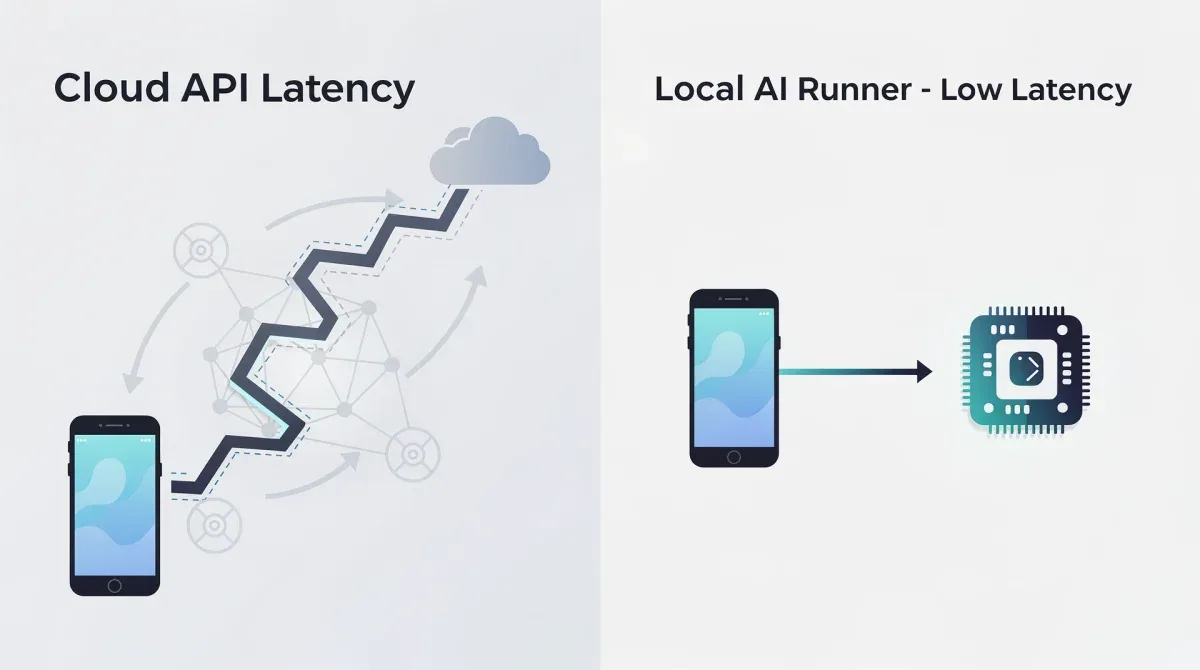
Data latency in cloud environments refers to the time it takes for data to travel from its source, be processed by a cloud-based AI model, and then return to the requesting application. This round-trip can be influenced by several factors:
- Network congestion and bandwidth limitations.
- Geographical distance between the data source and cloud servers.
- Processing queues and resource allocation within the cloud infrastructure.
- Security protocols and data encryption/decryption overhead.
Each of these elements contributes to cumulative delays, often making real-time AI applications impractical or suboptimal. The reliance on remote servers means that even minor network fluctuations can have a disproportionate impact on application responsiveness, leading to frustration for users and inefficiencies for businesses. Addressing these challenges requires a fundamental rethinking of where and how AI models are executed.
In conclusion, the escalating demand for real-time AI, coupled with the inherent latency challenges of cloud APIs, necessitates a pivot towards local processing. This shift promises not only reduced delays but also enhanced reliability and efficiency for a new generation of AI-powered applications, paving the way for more responsive and robust systems.
Benefits of local AI model runners beyond latency reduction
While the dramatic reduction in data latency is a primary driver for adopting local AI model runners, their advantages extend far beyond mere speed. These on-device solutions offer a suite of benefits that address critical concerns for modern enterprises, including enhanced data privacy, improved reliability, and significant cost efficiencies. By keeping data processing localized, organizations can gain greater control over their AI infrastructure and operations.
Local AI processing minimizes the exposure of sensitive data to external networks, fortifying privacy and security postures. This is particularly crucial for industries dealing with confidential information, where regulatory compliance and data governance are paramount. Moreover, operating AI models locally means applications are less susceptible to internet outages or cloud service disruptions, ensuring continuous availability and robust performance even in challenging network conditions.
Enhanced data privacy and security
One of the most compelling reasons to embrace local AI model runners is the inherent improvement in data privacy and security. When data remains on-device or within a local network, the risks associated with data transmission to third-party cloud servers are significantly mitigated. This localized approach provides several key advantages:
- Reduced Attack Surface: Less data traveling across the internet means fewer potential points of interception or cyberattack.
- Compliance with Regulations: Easier adherence to stringent data privacy regulations like GDPR, HIPAA, and CCPA by keeping sensitive information within controlled environments.
- Data Sovereignty: Organizations maintain full control over their data, eliminating concerns about cross-border data transfers or foreign government access.
This enhanced control fosters greater trust among users and stakeholders, positioning businesses as responsible custodians of information. The ability to process data at the edge, without sending it to the cloud, is a game-changer for applications where data sensitivity is a top priority, from healthcare to financial services.
Beyond security, local AI model runners also offer substantial cost savings. By offloading processing from expensive cloud resources, businesses can reduce their operational expenditures related to data transfer fees, API calls, and dedicated cloud compute instances. This economic benefit, combined with the performance and security advantages, makes a compelling case for integrating local AI into existing infrastructures. The ability to scale operations without incurring escalating cloud costs is a significant strategic advantage for growing enterprises.
Understanding the architecture of local AI model runners
Local AI model runners represent a paradigm shift in how artificial intelligence is deployed, moving away from centralized cloud infrastructure towards distributed, on-device processing. This architectural change is fundamental to achieving the promised reductions in latency and improvements in efficiency. Understanding their underlying structure is key to appreciating their transformative potential and how they differ from traditional cloud-based AI services.

At its core, a local AI model runner involves deploying trained AI models directly onto edge devices, local servers, or embedded systems. These devices then perform inference—the process of applying a trained model to new data to make predictions or decisions—without needing to send data to a remote cloud server. This close proximity of computation to the data source is what unlocks the significant performance gains and latency reductions that characterize local AI.
Key components and operational flow
The architecture of local AI model runners typically comprises several critical components that work in concert to enable efficient on-device inference:
- Optimized AI Models: Models are often compressed or quantized to run efficiently on resource-constrained edge hardware, maintaining accuracy while reducing computational demands.
- Inference Engines: Specialized software frameworks (e.g., ONNX Runtime, OpenVINO, TensorFlow Lite) that execute the optimized models on the local hardware, leveraging available processors (CPUs, GPUs, NPUs).
- Edge Devices/Local Servers: The hardware platforms where the models and inference engines reside, ranging from IoT devices and smartphones to powerful local servers.
- Data Pre-processing Modules: Components that prepare raw input data for the AI model, often integrated directly into the edge device's software stack.
The operational flow is straightforward: data is captured by the edge device, pre-processed locally, fed into the on-device inference engine, and the results are generated almost instantaneously. This entire process bypasses the internet, eliminating network-related latency and ensuring real-time responsiveness. This self-contained processing environment also enhances security, as sensitive data never leaves the local perimeter, minimizing exposure to external threats.
In essence, local AI model runners empower devices to become intelligent endpoints, capable of autonomous decision-making without constant reliance on cloud connectivity. This architectural shift not only improves performance but also opens up new possibilities for AI deployment in environments with limited or intermittent internet access, driving innovation across various sectors.
Top 4 local AI model runners revolutionizing the edge
The landscape of local AI model runners is rapidly expanding, with several powerful tools emerging as frontrunners in enabling efficient on-device inference. These platforms provide the necessary frameworks and optimizations to deploy complex AI models directly to edge devices, significantly reducing reliance on cloud infrastructure. Selecting the right runner depends on specific project requirements, hardware constraints, and the types of AI models being utilized.
Each of these top contenders brings unique strengths to the table, from broad hardware compatibility to specialized performance optimizations. Their development reflects a concerted effort across the industry to push AI capabilities closer to the data source, addressing the critical needs for speed, security, and autonomy. Exploring their individual features helps in making informed decisions for optimizing AI deployments.
1. ONNX Runtime: Versatility and performance across devices
ONNX Runtime is an open-source inference engine designed to accelerate machine learning models across a wide range of hardware platforms and operating systems. Its key strength lies in its support for the Open Neural Network Exchange (ONNX) format, which allows developers to train models in one framework (e.g., PyTorch, TensorFlow) and deploy them efficiently with ONNX Runtime on another. This interoperability is crucial for flexible AI deployments.
- Cross-Platform Compatibility: Runs on Windows, Linux, macOS, Android, iOS, and embedded systems.
- Hardware Acceleration: Leverages hardware accelerators like GPUs, FPGAs, and specialized AI chips through various execution providers.
- Performance Optimization: Includes graph optimizations and kernel fusion techniques to boost inference speed and reduce memory footprint.
- Broad Model Support: Compatible with a vast array of deep learning models and traditional machine learning algorithms.
ONNX Runtime's ability to seamlessly integrate with diverse ecosystems makes it an incredibly versatile choice for developers looking to deploy AI models locally without being locked into a single framework. Its continuous development by Microsoft and the open-source community ensures ongoing improvements in performance and feature sets, solidifying its position as a leading local AI runner.
2. TensorFlow Lite: Optimized for mobile and embedded devices
TensorFlow Lite is Google's lightweight solution for running TensorFlow models on mobile, embedded, and IoT devices. It is specifically designed to enable on-device machine learning inference with low latency and a small binary size. This makes it ideal for applications where computational resources are limited, but real-time AI capabilities are essential.
- Small Footprint: Highly optimized for minimal binary size, crucial for resource-constrained devices.
- On-Device Inference: Enables AI processing directly on the device, reducing network dependency and latency.
- Hardware Acceleration: Supports various hardware accelerators, including specialized mobile AI chips and GPUs.
- Developer-Friendly: Provides a comprehensive set of tools, including model optimization techniques and a rich ecosystem for deployment.
TensorFlow Lite is a cornerstone for many mobile AI applications, from image recognition on smartphones to voice assistants on smart home devices. Its focus on efficiency and ease of integration into existing mobile development workflows makes it a preferred choice for developers targeting the vast market of edge devices.
3. OpenVINO Toolkit: Intel's power for computer vision at the edge
Developed by Intel, the OpenVINO (Open Visual Inference and Neural Network Optimization) Toolkit is designed to accelerate computer vision and deep learning inference on Intel hardware. It provides a comprehensive suite of tools to optimize and deploy AI models, particularly for applications involving image and video analysis at the edge. OpenVINO is a powerful solution for industrial automation, smart retail, and surveillance systems.
- Intel Hardware Optimization: Maximizes performance on Intel CPUs, integrated GPUs, VPUs, and FPGAs.
- Pre-trained Models: Offers a library of pre-trained models optimized for various computer vision tasks.
- Model Optimizer: A tool to convert and optimize models from popular frameworks (TensorFlow, PyTorch, Caffe) into an intermediate representation.
- Deep Learning Deployment Toolkit: Facilitates the deployment of optimized models to target hardware.
OpenVINO's specialized focus on computer vision and its tight integration with Intel's hardware ecosystem make it an excellent choice for applications requiring robust visual AI processing at the edge. Its ability to extract high performance from standard Intel processors without requiring dedicated GPUs is a significant advantage for many industrial and commercial deployments.
4. NVIDIA TensorRT: High-performance inference for NVIDIA GPUs
NVIDIA TensorRT is an SDK for high-performance deep learning inference. It includes a deep learning inference optimizer and runtime that delivers low latency and high throughput for applications on NVIDIA GPUs. TensorRT is ideal for scenarios where maximum inference performance is critical, such as data centers, autonomous driving, and large-scale AI deployments at the edge that leverage NVIDIA hardware.
- GPU Optimization: Specifically designed to achieve peak performance on NVIDIA GPUs.
- Precision Calibration: Supports INT8 and FP16 precision to reduce model size and latency while maintaining accuracy.
- Layer and Tensor Fusion: Optimizes neural network graphs by combining layers and tensors for more efficient execution.
- Extensive Framework Support: Integrates with popular deep learning frameworks like TensorFlow, PyTorch, and MXNet.
TensorRT is the go-to solution for developers who demand the absolute highest inference performance from their NVIDIA GPU-powered systems. Its advanced optimization techniques allow models to run significantly faster and more efficiently, making it indispensable for cutting-edge AI applications where every millisecond of processing time is critical. The seamless integration with NVIDIA's extensive hardware and software ecosystem further enhances its appeal for high-performance computing.
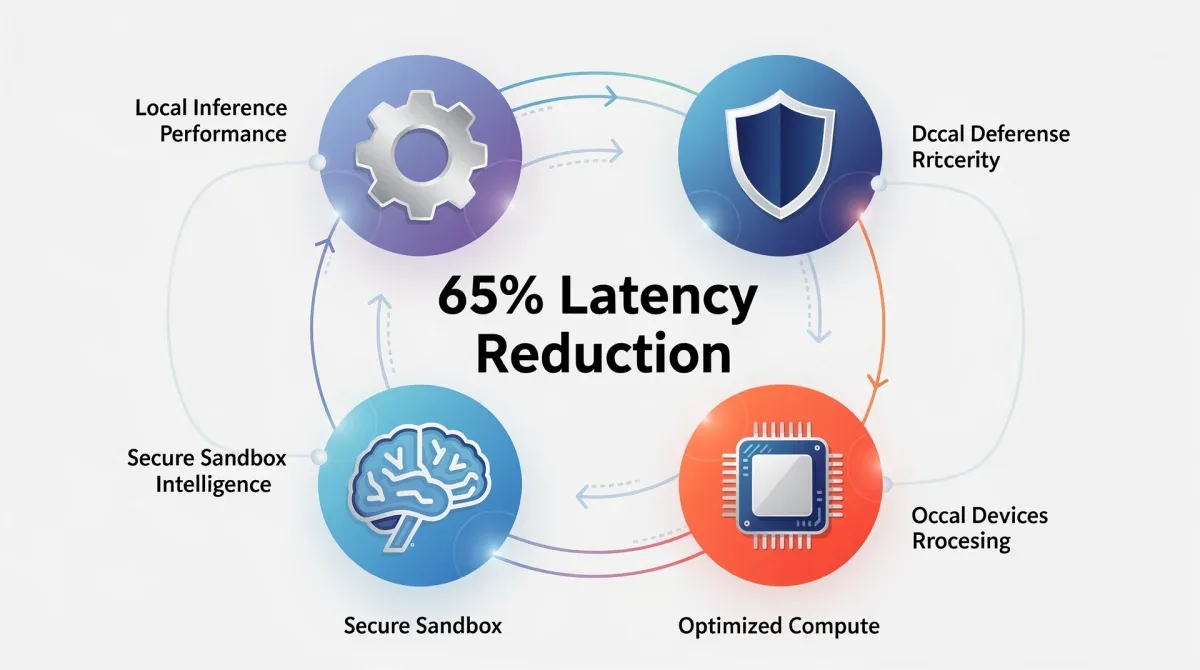
In summary, these four local AI model runners represent the vanguard of edge AI technology. Each offers distinct advantages tailored to different deployment scenarios and hardware environments, but all share the common goal of bringing AI inference closer to the data source, thereby dramatically reducing latency and enhancing the overall efficiency and responsiveness of AI-powered applications.
Implementing local AI: practical considerations and challenges
While the benefits of local AI model runners are compelling, their successful implementation involves navigating a series of practical considerations and potential challenges. Moving AI processing from the cloud to the edge requires careful planning, resource allocation, and a deep understanding of both hardware and software constraints. Addressing these aspects proactively is crucial for maximizing the advantages of local AI and ensuring a smooth transition.
Key considerations range from selecting the appropriate hardware and optimizing models for edge deployment to managing updates and ensuring robust security in distributed environments. Overcoming these hurdles is essential for fully realizing the promise of reduced latency and enhanced performance that local AI offers, transforming how businesses leverage artificial intelligence in their operations.
Hardware selection and model optimization
The choice of hardware is paramount for local AI deployments. Edge devices vary widely in computational power, memory, and energy consumption, directly impacting the performance of AI models. It's not just about raw power, but about selecting hardware that aligns with the specific needs of the application and the environment in which it will operate.
- Processor Capabilities: Evaluate CPUs, GPUs, NPUs, or FPGAs based on the model's complexity and inference requirements.
- Memory and Storage: Ensure sufficient RAM and storage for the model, inference engine, and application data.
- Power Consumption: Critical for battery-powered devices or deployments in remote locations without stable power.
- Form Factor and Durability: Consider the physical size and environmental resilience required for the deployment location.
Alongside hardware, optimizing AI models for edge inference is equally important. Cloud-trained models are often large and resource-intensive. Techniques like quantization, pruning, and knowledge distillation can significantly reduce model size and computational demands without a substantial loss in accuracy, making them suitable for deployment on resource-constrained edge devices.
Another significant challenge lies in the deployment and ongoing management of these distributed AI systems. Unlike centralized cloud deployments, local AI requires a robust strategy for updating models, ensuring data consistency, and monitoring performance across potentially thousands of individual devices. This necessitates sophisticated device management platforms and efficient over-the-air (OTA) update mechanisms to maintain system integrity and functionality.
In conclusion, while the allure of local AI is strong, successful implementation demands a holistic approach that considers hardware, software, security, and lifecycle management. By carefully addressing these practical aspects, organizations can effectively harness the power of edge AI to drive innovation and achieve superior operational outcomes.
Future trends and the evolving landscape of edge AI
The trajectory of local AI model runners is set for significant expansion and innovation, fundamentally reshaping the future of artificial intelligence. As hardware capabilities at the edge continue to advance and software optimizations become more sophisticated, we can anticipate even greater reductions in latency, enhanced processing power, and broader adoption across diverse industries. The evolving landscape of edge AI promises a future where intelligent processing is ubiquitous and instantaneous.
Key trends point towards increased integration of specialized AI accelerators directly into everyday devices, further blurring the lines between cloud and edge computing. This decentralization of AI will empower a new generation of smart applications, from hyper-personalized consumer experiences to highly autonomous industrial systems, all operating with unparalleled efficiency and responsiveness.
Emerging technologies and wider adoption
Several emerging technologies and market forces are poised to accelerate the adoption and capabilities of local AI:
- TinyML: The field of TinyML focuses on running machine learning models on extremely low-power microcontrollers, pushing AI to the very edge of computation and enabling intelligence in even the smallest devices.
- Federated Learning: This technique allows AI models to be trained on decentralized data residing on local devices without the data ever leaving its source, ensuring privacy while improving model accuracy.
- 5G and Beyond: The advent of ultra-low-latency 5G networks will complement edge AI by providing faster communication between edge devices and localized aggregation points, creating powerful hybrid architectures.
- Specialized AI Chips: Continuous advancements in neural processing units (NPUs) and other dedicated AI accelerators designed for edge computing will further boost on-device inference performance and energy efficiency.
These developments signify a future where AI is not just a cloud-centric service but an integral, pervasive component of virtually every connected device. The ability to perform complex AI tasks locally will unlock unprecedented levels of autonomy, security, and real-time responsiveness, transforming industries from healthcare to manufacturing and smart cities. The shift to local AI is not merely an optimization; it's a foundational change that will redefine our interaction with technology.
In conclusion, the future of AI is undeniably at the edge. The continuous evolution of local AI model runners, coupled with advancements in hardware and complementary technologies, will drive a profound transformation in how AI is developed, deployed, and experienced. This localized approach promises to deliver smarter, faster, and more secure AI solutions, paving the way for a truly intelligent and responsive digital world.
Overcoming challenges in local AI deployment
Deploying local AI model runners, while offering substantial benefits, is not without its challenges. Organizations must navigate complexities ranging from hardware compatibility and model optimization to ongoing maintenance and security in a distributed environment. Successfully addressing these hurdles is crucial for harnessing the full potential of edge AI and ensuring robust, reliable operation.
The transition from cloud-centric AI to local processing requires a strategic approach that considers the entire lifecycle of AI models, from development and deployment to monitoring and updates. Overcoming these challenges involves a combination of technical expertise, strategic planning, and the adoption of specialized tools and methodologies designed for edge computing.
Strategies for seamless integration and maintenance
To ensure a smooth transition and sustainable operation of local AI systems, several key strategies can be employed:
- Standardized Deployment Tools: Utilize platforms that simplify the deployment of models across diverse edge devices, ensuring consistency and reducing manual effort.
- Automated Model Updates: Implement robust over-the-air (OTA) update mechanisms to push new model versions and software patches efficiently to all deployed devices.
- Remote Monitoring and Diagnostics: Establish systems for remotely monitoring the performance and health of edge AI devices, allowing for proactive issue detection and resolution.
- Edge-Native Security: Develop security protocols specifically for edge environments, including secure boot, encrypted communications, and tamper detection, to protect both data and models.
- Resource Management: Implement intelligent resource management techniques to optimize power consumption and computational load on edge devices, extending their operational lifespan.
Furthermore, training and upskilling development teams in edge AI methodologies are essential. The nuances of optimizing models for resource-constrained environments, managing distributed systems, and ensuring real-time performance require specialized knowledge. Investing in this expertise will be critical for organizations looking to fully leverage local AI capabilities.
By systematically addressing these challenges, businesses can unlock the full spectrum of benefits offered by local AI model runners. This proactive approach not only mitigates risks but also establishes a resilient and efficient AI infrastructure capable of delivering high-performance, low-latency intelligence directly where it's needed most, driving innovation and competitive advantage in a rapidly evolving technological landscape.
The economic impact and ROI of local AI solutions
Beyond the technical advantages of reduced latency and enhanced performance, the adoption of local AI model runners presents a compelling economic case for businesses. By shifting AI processing from expensive cloud infrastructures to local devices, organizations can realize significant cost savings, improved operational efficiencies, and a stronger return on investment (ROI). This economic benefit is a critical factor driving the accelerated adoption of edge AI across various sectors.
The financial implications extend beyond direct cost reductions, encompassing benefits such as optimized resource utilization, reduced dependence on fluctuating cloud pricing models, and the ability to deploy AI in cost-sensitive environments. Understanding these economic drivers is key to building a robust business case for investing in local AI solutions.
Cost reduction and operational efficiency
One of the most immediate and tangible economic benefits of local AI is the reduction in operational costs associated with cloud services. Traditional cloud-based AI deployments often incur significant expenses through:
- API Call Charges: Each interaction with a cloud AI API typically carries a per-call cost, which can quickly accumulate with high usage.
- Data Transfer Fees: Moving large volumes of data to and from cloud servers often incurs egress fees, which can be substantial.
- Compute Instance Costs: Running dedicated cloud compute instances for AI inference can be expensive, especially for continuous or high-demand applications.
- Network Infrastructure: Investments in high-bandwidth internet connections to support cloud data transfers.
By processing AI models locally, these costs are drastically minimized or eliminated. Data remains on-device, reducing transfer fees, and the compute burden shifts to local hardware, often leveraging existing infrastructure or more cost-effective edge devices. This decentralization provides greater control over expenditure and allows for more predictable budgeting.
Moreover, local AI contributes to improved operational efficiency. Faster inference times mean quicker decision-making and more responsive applications, which can translate into tangible business benefits such as:
- Increased Productivity: Employees or automated systems can perform tasks faster due to real-time AI insights.
- Enhanced Customer Experience: Applications respond instantaneously, leading to higher user satisfaction and engagement.
- Optimized Resource Utilization: Better allocation of resources by leveraging on-device processing power, reducing the need for continuous cloud scaling.
- New Business Models: Enables the deployment of AI in remote or offline environments, opening up new market opportunities.
The cumulative effect of these cost reductions and efficiency gains results in a strong ROI for businesses that strategically implement local AI model runners. This financial advantage, combined with the performance and security benefits, positions local AI as a cornerstone for future-proof AI strategies, allowing organizations to innovate more rapidly and sustainably in a competitive market.
| Key Point | Brief Description |
|---|---|
| Reduced Latency | Local AI processes data on-device, cutting latency by up to 65% compared to cloud APIs. |
| Enhanced Privacy | Data remains local, significantly improving security and compliance with privacy regulations. |
| Cost Efficiency | Reduces reliance on expensive cloud API calls and data transfer fees, lowering operational costs. |
| Top Runners | Key players include ONNX Runtime, TensorFlow Lite, OpenVINO, and NVIDIA TensorRT. |
Frequently Asked Questions about Local AI
What are local AI model runners?▼Local AI model runners are software frameworks or engines that enable artificial intelligence models to execute inference directly on edge devices or local servers, rather than relying on remote cloud-based APIs. This architecture minimizes data transmission over networks, leading to faster processing and reduced latency for AI applications, improving responsiveness and data privacy.
How do local AI runners reduce data latency?▼Local AI runners reduce data latency by performing AI inference directly at the source of the data, on the device itself. This eliminates the need to send data to a distant cloud server for processing and then wait for the results to return, thereby cutting down network-related delays and enabling near-instantaneous AI responses, often by 65% or more.
What are the main benefits of using local AI model runners?▼The primary benefits include significantly reduced data latency, enhanced data privacy and security by keeping sensitive information on-device, improved reliability due to less dependence on network connectivity, and potential cost savings by minimizing cloud API usage and data transfer fees. They also enable AI applications in environments with limited internet access.
Which are some of the top local AI model runners available?▼Some of the leading local AI model runners include ONNX Runtime, known for its cross-platform compatibility and performance; TensorFlow Lite, optimized for mobile and embedded devices; Intel's OpenVINO Toolkit, specialized for computer vision on Intel hardware; and NVIDIA TensorRT, designed for high-performance inference on NVIDIA GPUs.
Are there any challenges in deploying local AI solutions?▼Yes, challenges include selecting appropriate hardware for specific edge environments, optimizing AI models to run efficiently on resource-constrained devices, managing updates and maintenance across a distributed fleet of devices, and ensuring robust security protocols for on-device data. Strategic planning and specialized tools are essential for successful deployment.
Conclusion
The emergence of local AI model runners marks a pivotal shift in how artificial intelligence is deployed and leveraged across industries. By moving AI inference closer to the data source, these innovative solutions are effectively addressing the critical limitations of cloud-based APIs, primarily the inherent data latency that can hinder real-time applications. The ability to reduce latency by up to 65% not only enhances performance but also unlocks new possibilities for AI in sensitive and time-critical environments. Beyond speed, the benefits extend to improved data privacy, heightened security, and significant cost reductions, making local AI an economically attractive and strategically sound choice. As technologies like ONNX Runtime, TensorFlow Lite, OpenVINO, and NVIDIA TensorRT continue to evolve, the future of AI is increasingly decentralized, intelligent, and responsive, promising a new era of innovation at the edge.
