90-Minute Sleep Cycle: Boost REM Recovery Faster
The 90-minute sleep cycle rule optimizes sleep by aligning with natural bodily rhythms, promoting deeper and more efficient REM recovery compared to rigid 8-hour rest schedules, enhancing overall cognitive function and well-being.
Have you ever wondered why, despite sleeping for a full eight hours, you still wake up feeling groggy and unrested? The answer might lie not in the quantity of sleep, but in its quality and alignment with your natural biological rhythms. Understanding the 90-minute sleep cycle rule can unlock a more profound and restorative sleep experience, potentially boosting REM recovery faster than a standard eight-hour rest.
Understanding the natural sleep architecture
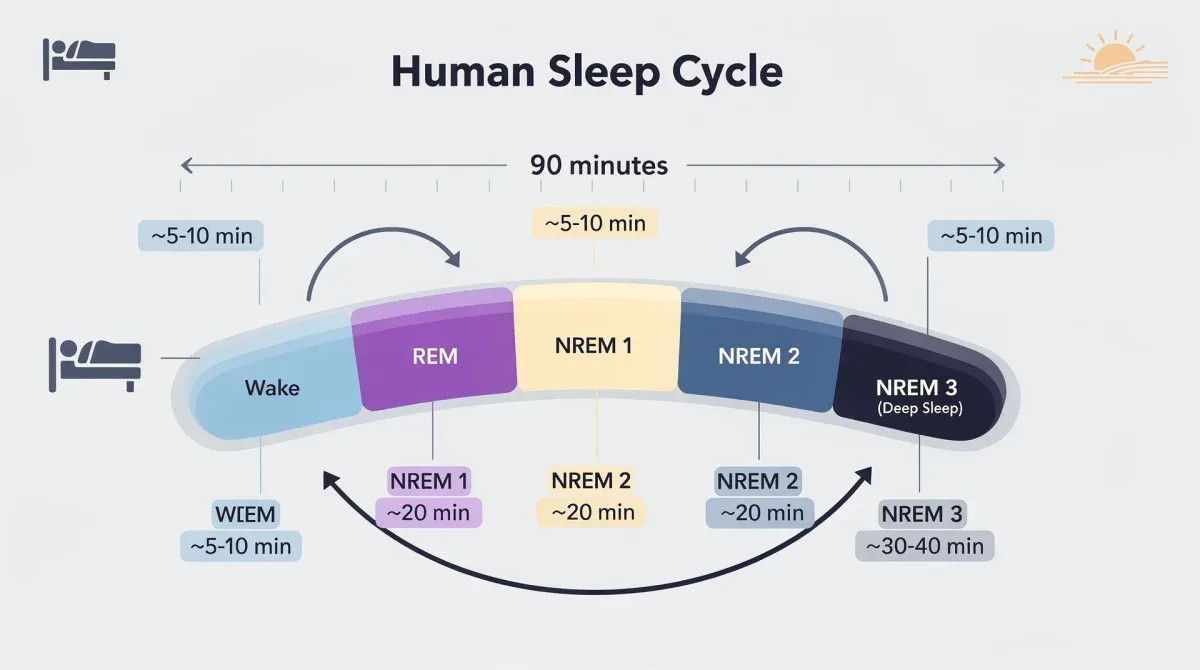
Our sleep isn't a continuous, undifferentiated state of unconsciousness. Instead, it's a complex, dynamic process composed of distinct stages that cycle throughout the night. These stages, broadly categorized into NREM (non-rapid eye movement) and REM (rapid eye movement) sleep, repeat in approximately 90-minute intervals, forming what scientists refer to as sleep cycles. Recognizing this inherent structure is the first step toward truly optimizing your rest and maximizing its benefits.
Each sleep cycle typically begins with NREM sleep, which is further divided into three stages: N1, N2, and N3. N1 is the lightest stage, often described as the transition from wakefulness to sleep. During N2, our heart rate and body temperature decrease, and brain activity slows. N3, or deep sleep, is the most restorative stage, crucial for physical recovery, tissue repair, and immune system function. Following these NREM stages, we transition into REM sleep, a period characterized by vivid dreams, increased brain activity, and muscle paralysis.
The four stages of a sleep cycle
Delving deeper into each stage reveals its unique purpose and contribution to our overall well-being. The progression through these stages is not always linear, but the general pattern holds consistent.
- NREM Stage 1 (N1): This is the lightest stage of sleep, lasting only a few minutes. You might still be somewhat aware of your surroundings and can be easily awakened. It's the 'dozing off' phase.
- NREM Stage 2 (N2): This stage accounts for about 50% of our total sleep. Brain waves slow down, and eye movement stops. Your body temperature drops, and heart rate slows, preparing you for deeper sleep.
- NREM Stage 3 (N3): Known as deep sleep or slow-wave sleep, N3 is vital for physical restoration. During this stage, growth hormones are released, and the body repairs itself. It's challenging to wake someone from N3 sleep.
- REM Sleep: Rapid Eye Movement sleep is where most dreaming occurs. Brain activity is similar to wakefulness, but your muscles are temporarily paralyzed, preventing you from acting out your dreams. REM is crucial for cognitive functions like memory consolidation and emotional processing.
Understanding these intricate stages is paramount because waking up during the middle of a deep sleep stage can leave you feeling disoriented and fatigued, even if you've had a sufficient amount of total sleep. Conversely, timing your awakening with the end of a sleep cycle, ideally during a lighter stage like N1 or REM, can lead to a more refreshed feeling.
Why 90 minutes is the magic number for sleep
The concept of the 90-minute sleep cycle is not arbitrary; it's rooted in our fundamental human physiology. Each complete cycle, from the initial descent into NREM through deep sleep and culminating in REM, typically takes around 90 minutes to complete. This predictable rhythm offers a powerful framework for optimizing our sleep, moving beyond the simplistic notion of 'eight hours' and embracing a more nuanced, cycle-based approach.
When we adhere to the 90-minute cycle rule, we aim to wake up at the end of a complete cycle, rather than in the middle of a deep sleep stage. This strategic timing aligns with our body's natural transitions, making the awakening process smoother and more natural. Imagine a train journey: it's far more pleasant to disembark at a station stop than to be abruptly pulled off between stops. Our sleep works in a similar fashion, with the end of a 90-minute cycle acting as a natural 'station' for waking.
Optimizing your bedtime and wake-up times
To implement the 90-minute rule, you need to work backward from your desired wake-up time. For example, if you want to wake up at 7:00 AM, you might aim for bedtimes that allow for 5 or 6 complete cycles. This could mean going to bed at 10:00 PM (7 hours, 420 minutes = 4.6 cycles, so you'd wake up mid-cycle) or, more effectively, at 10:30 PM (6.5 hours, 390 minutes = 4.3 cycles, still mid-cycle). A better approach would be to target 7.5 hours (450 minutes, 5 cycles) or 6 hours (360 minutes, 4 cycles). If you wake at 7:00 AM, going to bed at 11:30 PM (7.5 hours) or 1:00 AM (6 hours) would align with completing full cycles.
- Calculate your ideal bedtime: Subtract multiples of 90 minutes from your desired wake-up time.
- Experiment with sleep durations: Find what feels best for you. Some people thrive on 4 cycles (6 hours), while others need 5 cycles (7.5 hours) or even 6 cycles (9 hours).
- Consistency is key: Try to maintain a consistent sleep and wake schedule, even on weekends, to reinforce your circadian rhythm.
By consciously planning your sleep around these natural cycles, you empower your body to complete its restorative processes without interruption. This focused approach to sleep timing can dramatically improve how you feel upon waking, leaving you more alert and energized for the day ahead.
The critical role of REM sleep in cognitive function
REM sleep is often considered the most mysterious and intriguing stage of our sleep cycle, but its importance cannot be overstated, especially when it comes to cognitive function and emotional regulation. During REM, our brain becomes highly active, processing information, consolidating memories, and even engaging in creative problem-solving. It's a period of intense mental activity that is vital for our daily performance and long-term mental health.
While deep sleep (N3) focuses on physical restoration, REM sleep is the brain's time to reorganize, integrate new experiences, and solidify learning. Without adequate REM, you might find yourself struggling with memory recall, experiencing mood swings, or having difficulty focusing. This makes optimizing REM recovery a crucial component of any effective sleep strategy, particularly for those with demanding intellectual or emotional lives.
How REM sleep impacts daily life
The effects of sufficient REM sleep extend far beyond just feeling rested. It plays a direct role in various aspects of our waking lives.
- Memory Consolidation: REM sleep helps transfer short-term memories into long-term storage, making it easier to recall information learned during the day.
- Emotional Regulation: During REM, the brain processes emotional experiences, helping us to cope with stress and regulate our moods more effectively.
- Problem-Solving and Creativity: Studies suggest that REM sleep can enhance our ability to find creative solutions to problems and think outside the box.
- Learning and Skill Acquisition: For students and professionals alike, adequate REM sleep is essential for mastering new skills and retaining complex information.
By ensuring you complete full 90-minute cycles, you naturally allow your body to experience the necessary duration and quality of REM sleep. This structured approach helps prevent the common issue of cutting REM short, which often happens when sleep is abruptly interrupted or when individuals consistently get less than their optimal number of cycles.
Boosting REM recovery with the 90-minute rule
The beauty of the 90-minute sleep cycle rule lies in its ability to naturally enhance REM recovery. As the night progresses, the proportion of REM sleep within each 90-minute cycle tends to increase. This means that your later sleep cycles are richer in REM, making it even more critical to complete these cycles without interruption. By structuring your sleep duration as a multiple of 90 minutes, you are giving your body the best chance to maximize its REM stages.

Traditional advice often focuses solely on getting 'eight hours' of sleep, but this can be misleading. If you go to bed at 11:00 PM and wake at 7:00 AM, you're sleeping for exactly 8 hours, which is 5.33 cycles. This means you'd likely be waking up in the middle of a sleep cycle, potentially during deep sleep, leading to that groggy feeling. In contrast, aiming for 7.5 hours (5 cycles) or 9 hours (6 cycles) could result in a much more refreshing awakening, as you'd be emerging from a lighter sleep stage.
Practical strategies for optimizing REM
Implementing the 90-minute rule requires a bit of planning but yields significant benefits. Beyond simply calculating your bedtime, there are other habits that can support robust REM sleep.
- Consistent Sleep Schedule: Go to bed and wake up at the same time each day, even on weekends. This reinforces your circadian rhythm.
- Create a Relaxing Bedtime Routine: Wind down with activities like reading, a warm bath, or meditation. Avoid screens for at least an hour before bed.
- Optimize Your Sleep Environment: Ensure your bedroom is dark, quiet, and cool. A comfortable mattress and pillows are also essential.
- Limit Caffeine and Alcohol: Both substances can disrupt sleep architecture, particularly REM sleep, if consumed too close to bedtime.
By integrating these practices with the 90-minute cycle rule, you create an environment conducive to optimal REM recovery. This holistic approach ensures that not only are you getting enough sleep, but you're also getting the right kind of sleep at the right times, leading to enhanced cognitive function and overall well-being.
Comparing 90-minute cycles to standard 8-hour rest
The prevailing wisdom for decades has been that adults need eight hours of sleep per night. While this general guideline is well-intentioned, it often overlooks the nuanced reality of our sleep architecture. The critical distinction between simply getting eight hours of sleep and aligning with 90-minute sleep cycle multiples lies in the quality of awakening and the efficiency of restorative processes, particularly REM recovery.
Consider two individuals: one sleeps exactly eight hours, and the other sleeps 7.5 hours, timed to complete five 90-minute cycles. The person sleeping eight hours might frequently wake up feeling disoriented or sluggish because their alarm could be interrupting them in the middle of a deep sleep stage. This is known as sleep inertia, and it can significantly impair cognitive performance and mood upon waking.
The drawbacks of arbitrary sleep durations
Waking up mid-cycle can have several negative consequences that impact your day.
- Increased Sleep Inertia: Feeling groggy and disoriented, which can last for minutes or even hours after waking.
- Reduced Alertness: Difficulty concentrating and performing tasks effectively in the morning.
- Impaired Mood: Greater irritability and lower overall mood due to an interrupted sleep process.
- Less Efficient REM Recovery: If your alarm consistently cuts short your later, REM-rich cycles, you're missing out on crucial cognitive and emotional processing.
In contrast, the individual who sleeps for 7.5 hours, completing five full 90-minute cycles, is more likely to wake up naturally during a lighter stage of sleep. This results in a more refreshed and energized feeling, as their body and brain have completed their natural restorative phases without abrupt interruption. The emphasis shifts from duration alone to duration optimized for physiological cycles.

Implementing the 90-minute rule into your routine
Transitioning to a sleep schedule based on 90-minute cycles might seem daunting at first, but with a bit of planning and consistency, it can become a natural and highly beneficial part of your routine. The key is to approach it with flexibility and an understanding that individual needs can vary slightly. Start by observing your current sleep patterns and then gradually adjust to align with the cycle rule.
Begin by identifying your ideal wake-up time. From there, count back in 90-minute increments to determine potential bedtimes. For instance, if you need to be awake at 6:30 AM, possible bedtimes could be 11:00 PM (7.5 hours, 5 cycles) or 9:30 PM (9 hours, 6 cycles). Experiment with which duration leaves you feeling most refreshed. It's not about forcing yourself into a rigid schedule, but rather finding the cycle multiple that best suits your body's unique requirements.
Tips for a smooth transition
Making changes to your sleep habits can take time, but these tips can help you adapt more easily.
- Use Sleep Calculators: Many online tools and apps can help you calculate ideal bedtimes based on the 90-minute cycle.
- Gradual Adjustments: If your current bedtime is far off, shift it by 15-30 minutes each night until you reach your target.
- Monitor How You Feel: Pay attention to your energy levels, mood, and cognitive function throughout the day. This feedback is invaluable.
- Avoid the Snooze Button: Hitting snooze can disrupt your body's natural waking process and lead to sleep inertia.
Remember, the goal is not perfection but optimization. There will be nights when you can't adhere strictly to the schedule, and that's perfectly normal. The power of the 90-minute sleep cycle rule comes from its consistent application over time, which helps to regulate your circadian rhythm and enhance the restorative power of your sleep, particularly for vital REM recovery.
By integrating this scientifically-backed approach, you're not just sleeping; you're actively optimizing your body's natural processes for peak performance and well-being. This investment in quality sleep pays dividends in improved mood, sharper cognitive function, and sustained energy throughout your day.
| Key Aspect | Brief Description |
|---|---|
| Sleep Cycles | Human sleep occurs in approximately 90-minute cycles, moving through NREM and REM stages. |
| 90-Minute Rule | Aligning bedtime and wake-up with multiples of 90 minutes for optimal awakening. |
| REM Recovery | Crucial for memory, emotion, and cognitive function; maximized by completing full cycles. |
| Benefits | Reduced grogginess, improved mood, enhanced cognitive performance, and overall well-being. |
Frequently asked questions about the 90-minute sleep cycle
What exactly is a 90-minute sleep cycle?▼A 90-minute sleep cycle refers to the approximate duration it takes for the human brain to complete one full progression through all sleep stages: NREM 1, NREM 2, NREM 3 (deep sleep), and REM sleep. These cycles repeat throughout the night, with the proportion of each stage varying.
How does the 90-minute rule boost REM recovery?▼By timing your sleep duration to be a multiple of 90 minutes (e.g., 6 hours, 7.5 hours, 9 hours), you ensure that you complete full sleep cycles. Later cycles are richer in REM sleep, so uninterrupted completion allows for maximal REM recovery, essential for cognitive functions and emotional processing.
Is 7.5 hours of sleep better than 8 hours if following this rule?▼For many, yes. 7.5 hours (five 90-minute cycles) can be more restorative than 8 hours, as 8 hours is 5.33 cycles, likely leading to waking mid-cycle. Waking at the end of a full cycle, even if it's slightly less total sleep, can lead to feeling more refreshed and alert.
Can I use a sleep tracker to help with the 90-minute rule?▼Yes, many sleep trackers can monitor your sleep stages and provide insights into your cycles. While not perfectly precise, they can help you identify patterns and better estimate when you're likely to be in a lighter sleep stage, aiding in timing your wake-up for optimal alertness.
What if I can't always stick to the 90-minute schedule?▼Life happens, and strict adherence isn't always possible. The goal is consistency over time. Even partial adherence can improve sleep quality. Focus on establishing a regular bedtime and wake-up time, and prioritize completing full cycles whenever possible to maximize benefits.
Conclusion
Embracing the 90-minute sleep cycle rule represents a paradigm shift from simply counting hours to truly understanding and respecting our body's natural sleep architecture. By aligning our sleep and wake times with these intrinsic cycles, we unlock a more efficient and profound restorative process, particularly in boosting REM recovery. This isn't just about feeling less groggy; it's about enhancing cognitive function, stabilizing mood, and improving overall daily performance. While traditional advice often centers on a rigid eight-hour benchmark, the science suggests that quality, timed sleep, rather than mere quantity, is the ultimate key to unlocking optimal rest and a more vibrant, energized life. By making conscious choices about when and how we sleep, we invest directly in our well-being.
