De-Influencing: 35% Surge in US Intentional Purchasing
The rise of de-influencing is profoundly reshaping consumer behavior in the US, leading to a notable 35% surge in intentional purchasing as individuals prioritize value, authenticity, and sustainability over impulsive buys.
The landscape of consumer behavior in the United States is undergoing a profound transformation, marked by a significant shift towards more thoughtful and deliberate buying habits. This evolution, encapsulated by de-influencing intentional purchasing, signifies a growing skepticism towards traditional consumerism and a strong inclination towards value, longevity, and genuine need.
Understanding the De-Influencing Phenomenon
De-influencing represents a counter-narrative to the pervasive culture of consumerism often fueled by traditional influencers. Instead of promoting constant acquisition, de-influencers advocate for mindful consumption, often highlighting products that are genuinely worth the investment or, conversely, cautioning against popular but ultimately unnecessary purchases. This movement has gained considerable traction, resonating deeply with a populace increasingly wary of overconsumption and seeking more authentic connections with the brands and products they choose.
The Genesis of De-Influencing
The roots of de-influencing can be traced back to a growing disillusionment with the curated, often unrealistic, portrayals of products on social media. Consumers, particularly younger demographics, began questioning the authenticity of recommendations from influencers who appeared to promote everything without genuine conviction. This skepticism paved the way for a new breed of content creators who prioritize honesty and critical evaluation.
- Authenticity Over Aspiration: De-influencers prioritize genuine reviews and personal experiences, often highlighting flaws or limitations.
- Cost-Consciousness: Many de-influencers focus on helping consumers save money by avoiding overpriced or ineffective products.
- Sustainability Focus: A significant aspect involves encouraging eco-friendly choices and reducing overall waste.
The movement isn't just about negating purchases; it's about empowering consumers with information to make better, more informed decisions. It's a call to look beyond superficial trends and consider the practical utility, ethical implications, and long-term value of an item.
In essence, de-influencing is fostering a more critical consumer mindset. It's about moving away from reactive shopping—buying simply because something is popular or heavily advertised—and towards proactive purchasing, where every acquisition is a conscious choice. This shift is not merely a fleeting trend but a fundamental change in how Americans approach their buying decisions, promising a more sustainable and economically sensible future.
The 35% Surge in Intentional Purchasing: A Closer Look
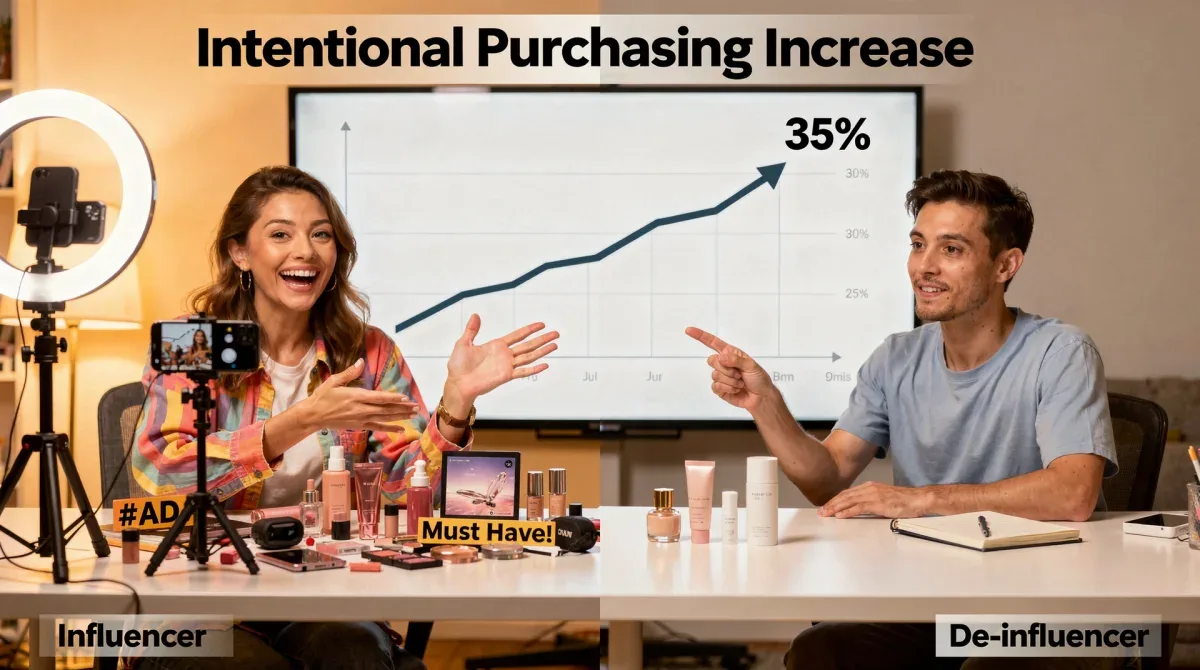
Recent data indicates a remarkable 35% surge in intentional purchasing across the US, a statistic that underscores the profound impact of the de-influencing movement. This isn't just a marginal increase; it represents a significant behavioral shift among American consumers who are now actively seeking purpose and value in their purchases rather than succumbing to impulse buys. This surge highlights a collective desire for more meaningful consumption, where every dollar spent is a deliberate choice.
Drivers Behind the Shift
Several factors contribute to this significant increase. Economic uncertainties, a heightened awareness of environmental issues, and a general fatigue with aggressive marketing tactics have all played a role. Consumers are becoming savvier, utilizing online resources and peer reviews to thoroughly research products before committing to a purchase. The rise of de-influencing has simply amplified these existing sentiments, giving consumers the tools and confidence to resist unnecessary spending.
- Economic Prudence: Inflation and rising living costs have made consumers more cautious with their budgets, encouraging thoughtful spending.
- Environmental Consciousness: A growing concern for the planet drives consumers to choose sustainable and ethically produced items.
- Information Overload: The sheer volume of product recommendations has led consumers to seek trusted, unbiased sources for guidance.

This surge isn't confined to specific demographics or product categories; it's a broad-based phenomenon affecting everything from beauty products to home goods. People are asking tougher questions: Do I really need this? Will it last? Is it worth the price? This critical inquiry is a direct result of the de-influencing narrative, which encourages a pause before purchase.
The implications of this shift are far-reaching, impacting retailers, marketers, and product developers alike. Brands that fail to adapt to this new consumer mindset, prioritizing genuine value and transparency, risk being left behind. The 35% increase in intentional purchasing is a clear signal that the era of mindless consumption is waning, replaced by a more discerning and empowered consumer base.
The Psychology of Intentional Consumerism
Intentional consumerism is more than just a trend; it's a psychological shift rooted in a desire for control, authenticity, and alignment with personal values. This mindset encourages individuals to make purchasing decisions that reflect their beliefs, needs, and long-term goals, moving away from the fleeting gratification of impulsive buys. The psychological underpinnings of this shift are complex, involving a re-evaluation of what constitutes true value and satisfaction.
Seeking Authenticity and Control
In an age of curated online personas and constant product bombardment, consumers are increasingly seeking authenticity. De-influencing provides a refreshing antidote, offering honest perspectives that resonate with a desire for genuine connection. This quest for authenticity extends to products themselves, with consumers preferring brands that demonstrate transparency, ethical practices, and a commitment to quality. The act of making an intentional purchase gives consumers a sense of control over their spending and their impact on the world.
Furthermore, the psychological reward of an intentional purchase often outweighs that of an impulsive one. When a consumer thoroughly researches and carefully selects a product, the satisfaction derived from its utility and alignment with their values is deeper and more lasting. This contrasts sharply with the fleeting dopamine hit of an impulse buy, which often leads to buyer's remorse.
- Values Alignment: Consumers seek products and brands that align with their personal ethics, such as sustainability or fair labor practices.
- Reduced Clutter: Intentional purchasing often leads to a more minimalist lifestyle, reducing physical and mental clutter.
- Long-Term Satisfaction: Investing in high-quality, durable items provides greater satisfaction over time compared to disposable goods.
The rise of de-influencing taps into this inherent human need for meaning and purpose. It empowers individuals to be the architects of their consumption habits, rather than passive recipients of marketing messages. This psychological empowerment is a powerful driver behind the 35% surge in de-influencing intentional purchasing, indicating a deeper, more profound shift in consumer consciousness.
Understanding this psychological undercurrent is crucial for both consumers and businesses. For individuals, it offers a path to greater fulfillment and financial prudence. For businesses, it highlights the importance of building trust, demonstrating genuine value, and aligning with the evolving values of their customer base.
The Role of Social Media in Shaping New Habits
Social media, once the primary playground for aspirational influencing, is now paradoxically serving as a powerful catalyst for de-influencing and the broader shift towards intentional purchasing. Platforms like TikTok, Instagram, and YouTube, which initially popularized influencer culture, are now witnessing a counter-movement where creators actively debunk product hype and encourage critical thinking. This evolution underscores the dynamic nature of online communities and their capacity to adapt and self-regulate consumer narratives.
From Hype to Honesty
The transition from relentless product promotion to candid reviews and cautionary tales is a direct response to audience demand. Consumers grew tired of feeling pressured to buy every trending item, leading to a natural gravitation towards content that offered a more balanced perspective. De-influencers leverage the same platforms to share their authentic experiences, often highlighting the impracticality, redundancy, or poor quality of popular products.
This shift is not without its complexities. While de-influencing promotes critical consumption, it still operates within the attention economy of social media. The challenge for de-influencers is to maintain their credibility and impact without inadvertently creating new forms of product obsession, albeit focused on avoidance rather than acquisition. The most effective de-influencers are those who empower their audience with knowledge, rather than simply dictating what not to buy.
- Community Building: De-influencers foster communities around shared values of mindful consumption and financial prudence.
- Educational Content: Many creators provide in-depth analyses, comparing products and explaining the nuances of purchasing decisions.
- Trend Reversal: Social media allows de-influencing messages to spread rapidly, sometimes even reversing established product trends.
The algorithms of social media platforms, designed to identify and promote engaging content, have inadvertently facilitated the spread of de-influencing. As more users interact with content that questions consumer norms, these platforms respond by surfacing similar material, thus amplifying the message of intentionality. This creates a virtuous cycle where consumer demand for honesty feeds the growth of de-influencing content, further fueling the 35% surge in de-influencing intentional purchasing.
Ultimately, social media's role has evolved from a one-way street of brand promotion to a more interactive forum where consumers collectively shape purchasing narratives. This dynamic environment is proving instrumental in fostering a more conscious and discerning consumer base across the US.
Economic Implications for Brands and Retailers
The significant 35% surge in intentional purchasing, driven by de-influencing, carries substantial economic implications for brands and retailers across the United States. This shift demands a strategic re-evaluation of marketing approaches, product development, and overall business models. Companies that fail to adapt to this new consumer mindset, which prioritizes authenticity, value, and ethical considerations, risk losing market share to more responsive competitors.
Adapting to a Discerning Market
For brands, the era of relying solely on aspirational marketing and celebrity endorsements is gradually fading. Consumers are now looking for substance over style, demanding transparency about product origins, ingredients, and manufacturing processes. This necessitates a pivot towards value-driven communication that highlights durability, functionality, and sustainability. Brands must build trust by being honest about their products' strengths and weaknesses, rather than presenting an idealized image.
Retailers, too, must adjust their strategies. This includes curating product selections that align with intentional consumer values, offering clear and comprehensive product information, and providing exceptional customer service that supports informed decision-making. The emphasis shifts from maximizing transaction volume to fostering long-term customer relationships built on trust and mutual respect.
- Transparency is Key: Brands must be open about their supply chains, ingredients, and ethical practices.
- Value Proposition: Focus on the long-term benefits, durability, and true utility of products rather than fleeting trends.
- Customer Education: Empower consumers with information to make informed choices, rather than just promoting products.
The de-influencing trend also encourages brands to innovate in areas like product longevity and repairability. Instead of pushing for continuous upgrades, companies might find success in offering products designed to last, supported by robust after-sales services. This aligns perfectly with the intentional consumer's desire to reduce waste and maximize the return on their investments.
The 35% surge in de-influencing intentional purchasing represents both a challenge and an opportunity. Brands and retailers that embrace this shift by prioritizing authenticity, sustainability, and genuine value will be well-positioned to thrive in this evolving economic landscape, building stronger connections with a more discerning consumer base.

The Future of Consumerism: Sustainability and Mindfulness
The rise of de-influencing and the subsequent 35% surge in intentional purchasing are not isolated incidents but rather indicators of a broader, more profound transformation in consumerism. The future points towards a landscape dominated by sustainability and mindfulness, where every purchase is viewed through a lens of environmental impact, ethical production, and genuine personal need. This evolving paradigm signals a permanent shift away from the disposable culture that has long characterized modern consumption.
Embracing a Conscious Lifestyle
Consumers are increasingly recognizing the interconnectedness of their purchasing habits with global issues, from climate change to social inequality. This awareness fuels a desire for products that are not only effective but also align with a conscious lifestyle. Sustainability, once a niche concern, is becoming a mainstream expectation, influencing choices in everything from fashion to food.
Mindfulness in consumption extends beyond environmental considerations to encompass personal well-being and financial health. It encourages consumers to question whether a purchase truly adds value to their lives or merely contributes to clutter and debt. The emphasis is on quality over quantity, experiences over possessions, and long-term satisfaction over immediate gratification.
- Circular Economy: Growing interest in products that can be repaired, reused, or recycled, reducing waste.
- Ethical Sourcing: Demand for transparency regarding labor practices and fair wages in supply chains.
- Minimalist Trends: A preference for fewer, higher-quality items that serve multiple purposes and last longer.
The de-influencing movement acts as a powerful enabler of this future, providing a framework for consumers to navigate complex purchasing decisions with greater clarity and purpose. It empowers individuals to resist the constant pressure to consume and instead cultivate habits that are both personally enriching and globally responsible. This cultural shift is not merely about buying less; it's about buying better and living more intentionally.
As the trend of de-influencing intentional purchasing continues to mature, we can anticipate a marketplace where sustainability and mindfulness are not just buzzwords but fundamental principles guiding both consumer choices and corporate strategies. This future promises a more balanced, responsible, and ultimately more fulfilling relationship between individuals and the products they choose to bring into their lives.
Navigating the New Consumer Landscape: Tips for Shoppers
For shoppers in the US, navigating the new consumer landscape shaped by de-influencing and the surge in intentional purchasing can be both empowering and challenging. The key is to develop strategies that enable thoughtful decision-making, allowing you to make purchases that genuinely align with your needs, values, and financial goals. This section offers practical tips to help you become a more intentional and satisfied consumer.
Practical Steps for Mindful Spending
One of the most effective ways to embrace intentional purchasing is to cultivate a habit of pausing before you buy. Ask yourself critical questions: Do I truly need this item? Do I already own something similar? What is the long-term value it will bring to my life? This simple act of reflection can prevent many impulse buys and lead to more satisfying acquisitions.
Furthermore, leverage the wealth of information available online. Beyond traditional product reviews, seek out de-influencer content that offers critical perspectives and honest assessments. Compare different brands, read about product durability, and consider the environmental and ethical footprint of your choices. Knowledge is your most powerful tool in this new consumer era.
- Create a Needs List: Before shopping, make a list of what you genuinely need, distinguishing it from wants.
- Research Thoroughly: Look beyond initial impressions; delve into reviews, comparisons, and brand ethics.
- Consider Longevity: Prioritize quality and durability over fleeting trends or cheap, disposable items.
- Budget Consciously: Set spending limits and stick to them, ensuring purchases fit into your financial plan.
Another crucial tip is to resist the allure of fast fashion and disposable goods. While these items may seem appealing due to their low price points, they often contribute to waste and provide short-lived satisfaction. Instead, invest in timeless pieces that can be worn or used for years. This approach not only saves money in the long run but also reduces your environmental impact.
By adopting these strategies, consumers can actively participate in the movement towards de-influencing intentional purchasing. This not only leads to more satisfying personal experiences but also contributes to a more sustainable and responsible marketplace for everyone in the US. Becoming a conscious consumer is a journey, and every thoughtful decision is a step in the right direction.
| Key Trend | Brief Description |
|---|---|
| De-Influencing Rise | A counter-movement to traditional influencing, promoting mindful consumption and honest product reviews. |
| 35% Intentional Purchasing Surge | Consumers in the US are increasingly making deliberate, value-driven purchasing decisions. |
| Economic & Social Impact | Brands must adapt to transparency and value, while consumers benefit from smarter spending and reduced waste. |
| Future of Consumerism | Emphasizes sustainability, mindfulness, and a conscious approach to lifestyle and consumption choices. |
Frequently Asked Questions About De-Influencing
What exactly is de-influencing?▼De-influencing is a social media trend where creators advise against purchasing hyped or trending products, often suggesting more practical or affordable alternatives. It aims to promote mindful consumption and reduce impulse buys, fostering a more critical approach to consumerism among audiences.
Why has intentional purchasing surged by 35%?▼The 35% surge is driven by several factors, including economic pressures, increased environmental awareness, and a growing skepticism towards traditional influencer marketing. De-influencing has empowered consumers to prioritize value, authenticity, and long-term utility over fleeting trends, leading to more deliberate buying decisions.
How does de-influencing affect brands and retailers?▼Brands and retailers are compelled to become more transparent, focus on genuine product value, and align with ethical and sustainable practices. The shift means less reliance on superficial marketing and more emphasis on building trust and offering products that truly meet consumer needs and values.
Is de-influencing just another trend, or a lasting change?▼While aspects of it may evolve, the underlying principles of de-influencing—authenticity, mindfulness, and sustainability—point to a lasting change in consumer behavior. It reflects a deeper cultural shift towards responsible consumption rather than a temporary fad, shaping the future of purchasing habits.
What can consumers do to embrace intentional purchasing?▼Consumers can practice intentional purchasing by creating needs lists, thoroughly researching products, prioritizing durability and ethical sourcing, and setting conscious budgets. Engaging with de-influencer content and questioning the necessity of purchases are also effective strategies for mindful consumption.
Conclusion
The rise of de-influencing has undeniably reshaped the consumer landscape across the US, culminating in a significant 35% surge in intentional purchasing. This transformative movement signifies a powerful shift towards more thoughtful, value-driven, and sustainable consumption habits. Consumers are no longer passive recipients of marketing messages but active participants who critically evaluate products, prioritize authenticity, and seek alignment with their personal values. For brands and retailers, adapting to this new paradigm means embracing transparency, focusing on genuine utility, and committing to ethical practices. Ultimately, de-influencing is fostering a more conscious marketplace, promising a future where mindful choices drive both individual satisfaction and collective well-being.
